Tell us about the job
Takes about a minute. No obligation.
Sizing a central AC system for Grant County starts with an honest look at how little the compressor runs. Homes in Grant County, ND run cooling about two months a year, from July through August. That idle stretch is where things go wrong quietly: refrigerant slowly bleeds from a loose fitting, a contactor corrodes, a capacitor weakens without ever being asked to start anything. When a contractor quotes a new install here, right-sizing matters because an oversized unit short-cycles through its brief working weeks and never runs long enough to dehumidify properly. The first call of July is also when every other homeowner discovers their old system failed over winter.
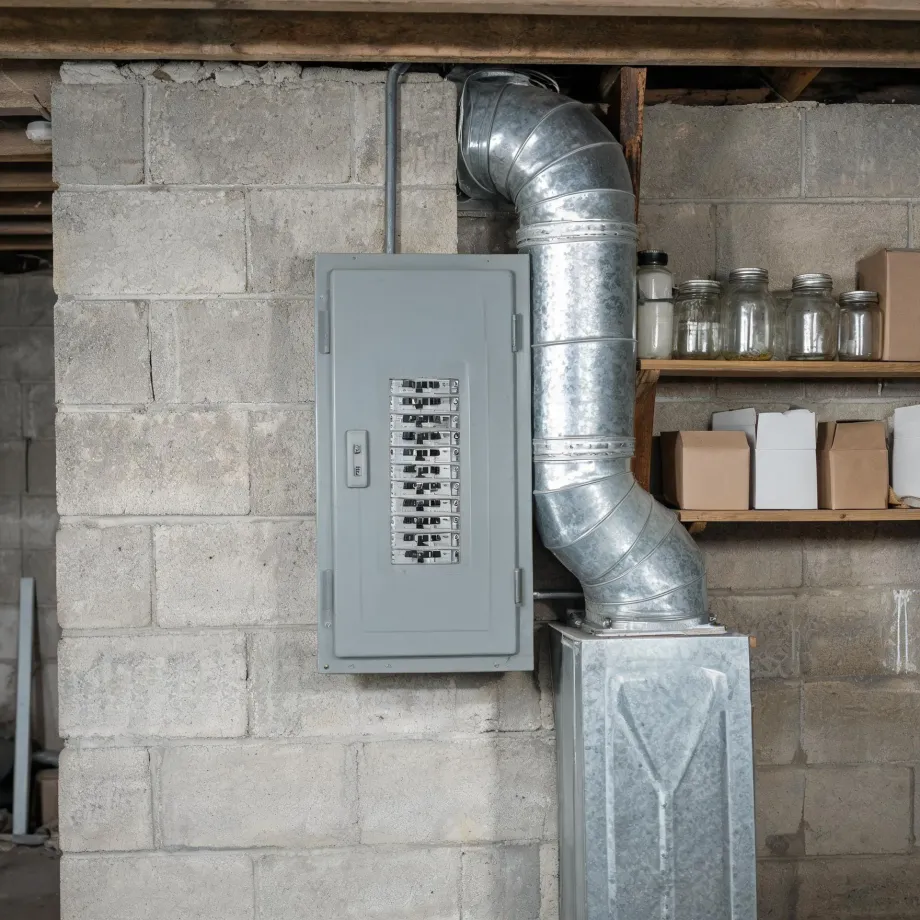
Ductwork laid down for one generation of equipment and then asked to carry another is where central AC installation in Grant County gets decided. Half the homes in Grant County, North Dakota were built in 1962 or earlier (2020-2024 ACS 5-year). When a system goes in today, the ducts running through the walls are the constraint a contractor has to resolve first: whether they are sized right, whether they are intact enough to move the volume a new unit needs, and whether the electrical service in the house will handle the draw. A quote that skips those questions prices the box and leaves the hard part for later.
What a Central AC Install Puts in Your Home
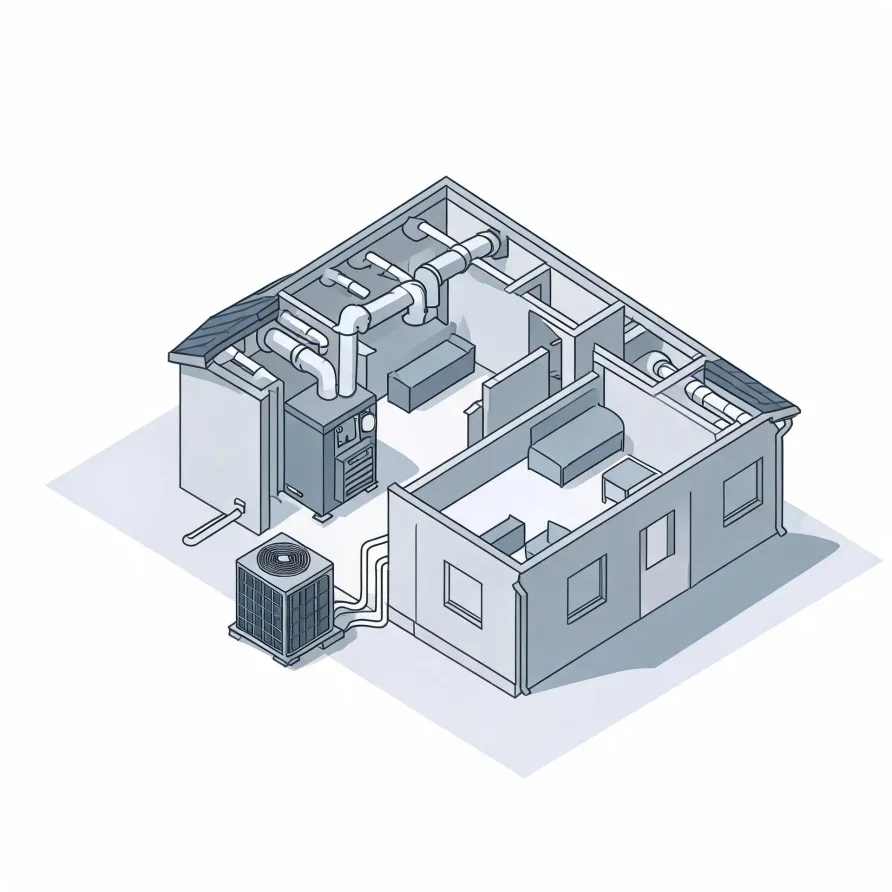
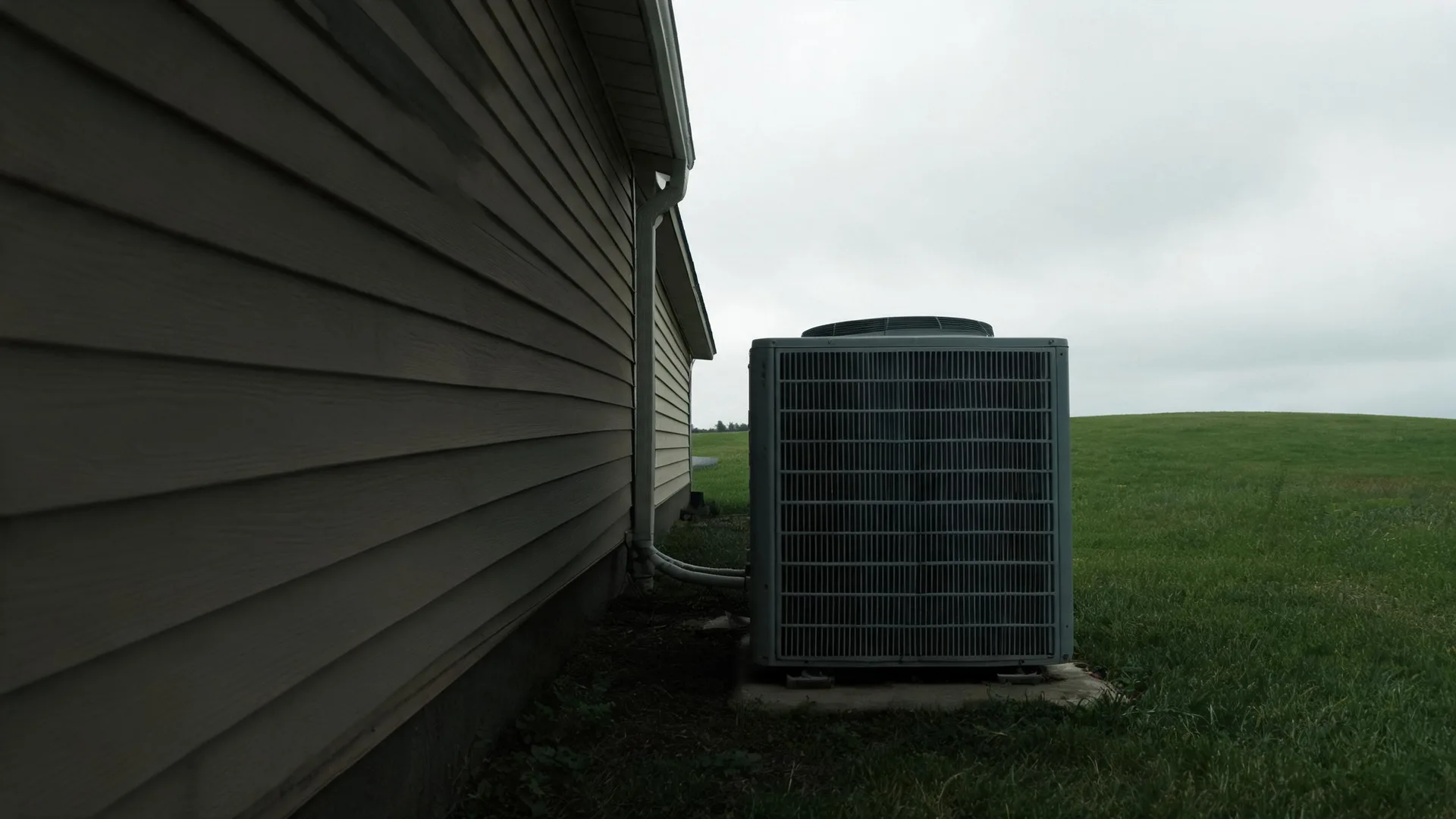
The outdoor condenser unit sits outside the house, usually on a concrete pad at ground level, and holds the compressor and coil that shed heat to the outside air. Inside, the air handler or furnace-mounted evaporator coil sits in a mechanical room, basement, or attic and is the point where cooled air enters the duct system.
A refrigerant line set runs between those two units, connecting the outdoor and indoor sides through the wall or floor. The thermostat mounts on an interior wall and is the control point that tells the system when to run.
The drawing shows a typical layout, and a licensed contractor determines exactly what fits the configuration of this house.
Find a contractor in Grant CountyGrant County, by the numbers
157 severe weather events were recorded in Grant County, North Dakota between 2015 and 2024.
NOAA National Centers for Environmental Information, Storm Events Database, bulk CSV export, events 2015-01-01 through 2024-12-31.Half the homes in Grant County, North Dakota were built in 1962 or earlier (2020-2024 ACS 5-year).
U.S. Census Bureau, 2020-2024 American Community Survey 5-Year EstimatesGrant County, North Dakota holds 1,635 housing units (2020-2024 ACS 5-year).
U.S. Census Bureau, 2020-2024 American Community Survey 5-Year EstimatesOwners occupy 83.4% of the occupied homes in Grant County, North Dakota (2020-2024 ACS 5-year).
U.S. Census Bureau, 2020-2024 American Community Survey 5-Year EstimatesCodes & Standards Covering Central AC Installation in Grant County, North Dakota9 sourced rules and standards
What the Install Actually Looks Like
Split-system central air conditioners rated below 45,000 Btu/h manufactured on or after January 1, 2023 must meet a federal minimum of 13.4 SEER2.
Split-system central air conditioners rated at or above 45,000 Btu/h manufactured on or after January 1, 2023 must meet a federal minimum of 13.4 SEER2.
Split-system central air conditioners manufactured between January 1, 2015 and December 31, 2022 had to meet 13 SEER, the metric that preceded SEER2.
Single-package central air conditioners manufactured on or after January 1, 2023 must meet a federal minimum of 13.4 SEER2.
Space-constrained central air conditioners manufactured on or after January 1, 2023 must meet a federal minimum of 11.7 SEER2.
Federal efficiency standards for split-system central air conditioners and heat pumps are set on each certified combination of outdoor unit and indoor coil rather than on the outdoor unit alone.
Residential and light commercial air conditioning and heat pump systems assembled in the field, including mini-splits and unitary systems, may not be installed on or after January 1, 2025 using a refrigerant with a global warming potential above 700.
A field-assembled system whose specified components were all manufactured or imported before January 1, 2025 carries no installation compliance date under the refrigerant restrictions and may still be installed.
Licensing and Legal Requirements in Grant County, North Dakota
North Dakota requires a contractor licence once the cost, value or price of a job exceeds four thousand dollars, and an unlicensed contractor may not bring a claim or a lawsuit in a North Dakota court over the work.
Severe Weather in Grant County
Weather extremes put direct pressure on heating and cooling equipment: the harder the climate pushes, the harder the system works. Central AC installation in Grant County is a decision shaped by what the local climate actually does, and this data is part of that picture.
157 severe weather events, 2015–2024. Source: NOAA National Centers for Environmental Information, Storm Events Database.