Tell us about the job
Takes about a minute. No obligation.
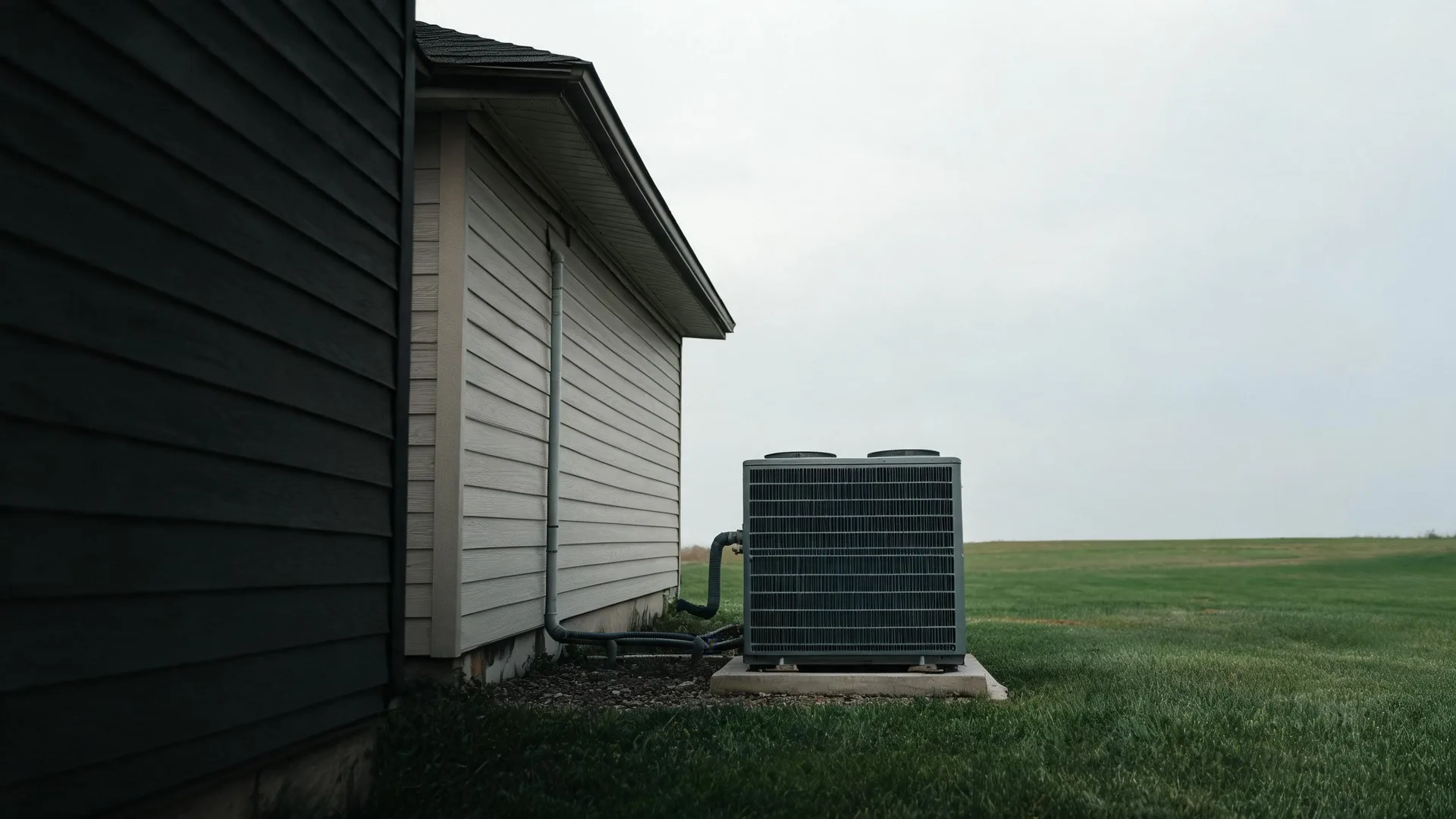
A fault in a central AC system can develop over the off-season and give no sign until the compressor tries to start on the first genuinely hot day. Homes in Slope County, ND run cooling about two months a year, from July through August. The condenser fan, the contactor, and the capacitor all sit unpowered through the long idle stretch, and corrosion or a failing capacitor will not announce itself until the system is called to run. A contractor diagnosing a repair in July is often working backward from a first-call failure, checking what degraded while the equipment sat rather than what wore out under load.
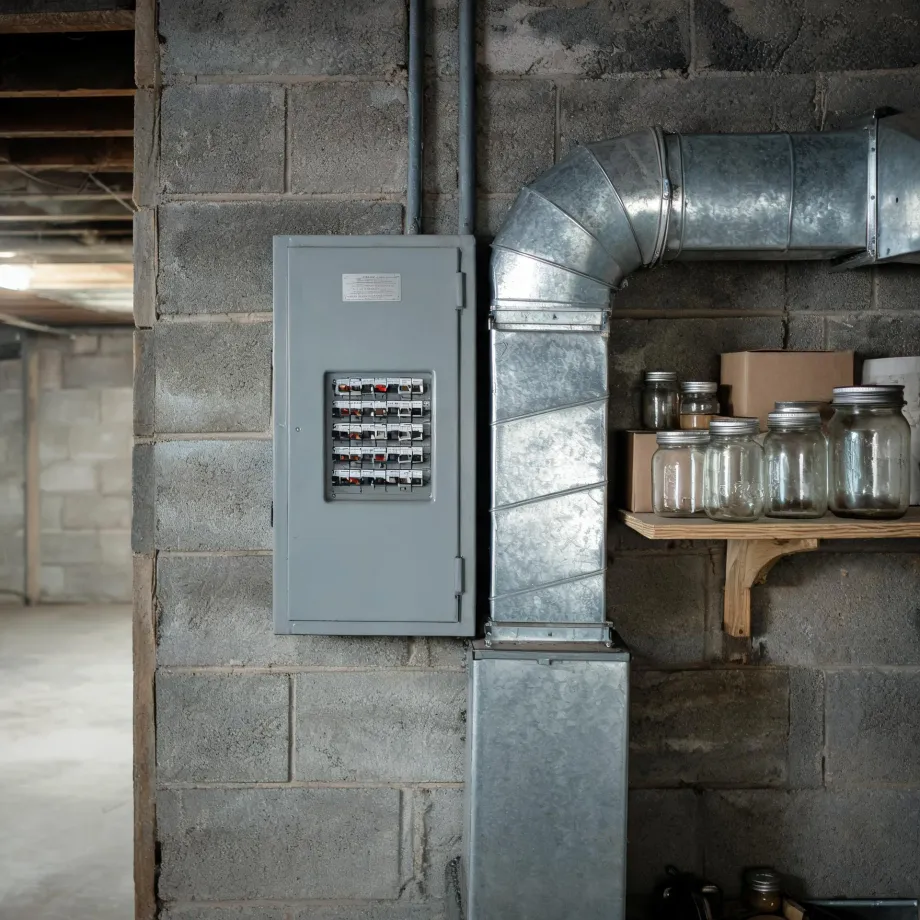
Ductwork in a house this old was built around whatever system came first, and that original system is long gone. What a contractor opens on a repair call here is likely to be a replacement, possibly more than one, sitting in infrastructure that was adapted rather than purpose-built for it. Half the homes in Slope County, North Dakota were built in 1961 or earlier (2020-2024 ACS 5-year). That history matters on a repair job because it widens the parts question: a unit installed into older stock tends to be a model chosen for fit rather than brand continuity, and finding the specific components it takes requires more than a standard order. The contractor has to confirm what is actually in the system before any sourcing starts.
The Parts of a Central AC a Contractor Checks First
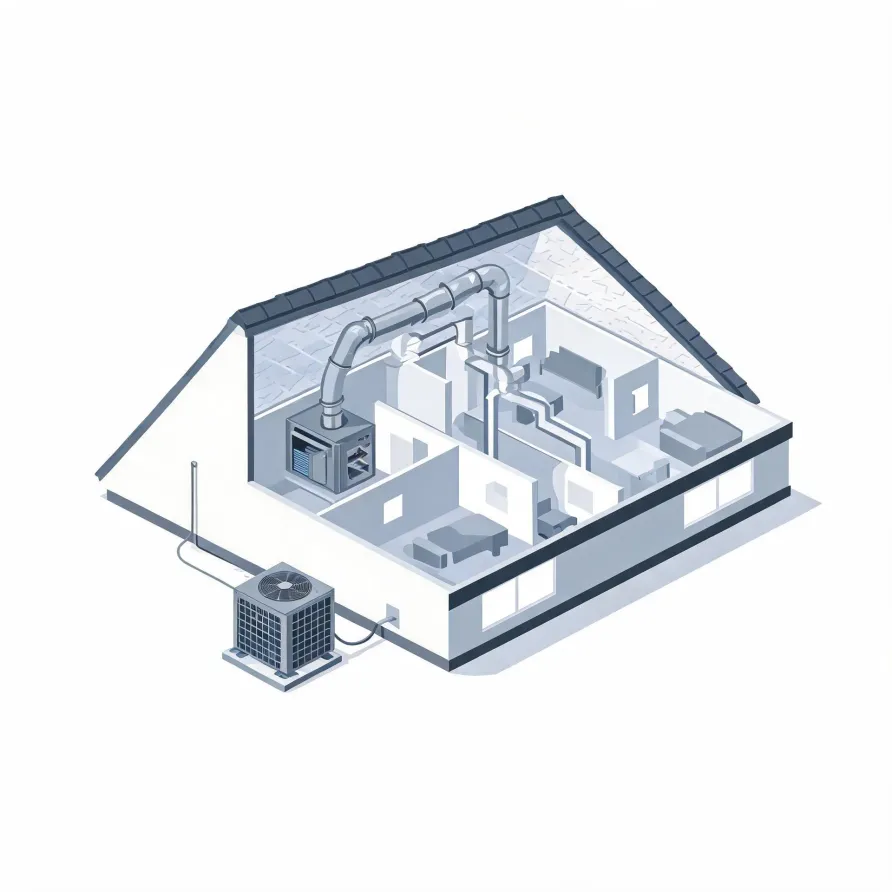
The outdoor condenser unit sits outside the house, usually on a concrete pad at ground level, and it is where heat leaves the system. Inside, the air handler or furnace cabinet holds the evaporator coil, which is the piece a contractor reaches first when the system is blowing warm air or not moving air well. Both are common starting points when something goes wrong.
The refrigerant lines run between those two units, and a contractor checks them for leaks or damage when pressure readings are off. The thermostat, mounted on an interior wall, controls the whole system, and a fault there can look like a much larger problem until it is ruled out.
The drawing shows a typical layout, and a licensed contractor determines what applies to this specific house and system.
Find a contractor in Slope CountySlope County by the numbers
117 severe weather events were recorded in Slope County, North Dakota between 2015 and 2024.
NOAA National Centers for Environmental Information, Storm Events Database, bulk CSV export, events 2015-01-01 through 2024-12-31.Half the homes in Slope County, North Dakota were built in 1961 or earlier (2020-2024 ACS 5-year).
U.S. Census Bureau, 2020-2024 American Community Survey 5-Year EstimatesSlope County, North Dakota holds 456 housing units (2020-2024 ACS 5-year).
U.S. Census Bureau, 2020-2024 American Community Survey 5-Year EstimatesOwners occupy 80.7% of the occupied homes in Slope County, North Dakota (2020-2024 ACS 5-year).
U.S. Census Bureau, 2020-2024 American Community Survey 5-Year EstimatesCodes & Standards Governing Central AC Repair in Slope County, North Dakota9 sourced rules and standards
What HVAC Repair Looks Like in Slope County
Split-system central air conditioners rated below 45,000 Btu/h manufactured on or after January 1, 2023 must meet a federal minimum of 13.4 SEER2.
Split-system central air conditioners rated at or above 45,000 Btu/h manufactured on or after January 1, 2023 must meet a federal minimum of 13.4 SEER2.
Split-system central air conditioners manufactured between January 1, 2015 and December 31, 2022 had to meet 13 SEER, the metric that preceded SEER2.
Single-package central air conditioners manufactured on or after January 1, 2023 must meet a federal minimum of 13.4 SEER2.
Space-constrained central air conditioners manufactured on or after January 1, 2023 must meet a federal minimum of 11.7 SEER2.
Federal efficiency standards for split-system central air conditioners and heat pumps are set on each certified combination of outdoor unit and indoor coil rather than on the outdoor unit alone.
Residential and light commercial air conditioning and heat pump systems assembled in the field, including mini-splits and unitary systems, may not be installed on or after January 1, 2025 using a refrigerant with a global warming potential above 700.
A field-assembled system whose specified components were all manufactured or imported before January 1, 2025 carries no installation compliance date under the refrigerant restrictions and may still be installed.
Licensing and Legal Requirements in Slope County, North Dakota
North Dakota requires a contractor licence once the cost, value or price of a job exceeds four thousand dollars, and an unlicensed contractor may not bring a claim or a lawsuit in a North Dakota court over the work.
Severe Weather Events in Slope County
Extreme weather puts real stress on central AC systems, cycling compressors and capacitors hard and shortening the life of components. How much strain a system accumulates depends on local conditions, which is why weather history belongs alongside any honest look at repair work in this area.
117 severe weather events, 2015–2024. Source: NOAA National Centers for Environmental Information, Storm Events Database.