Tell us about the job
Takes about a minute. No obligation.
The compressor in a central AC unit starts and stops repeatedly across every July it runs, and each start puts more stress on the contactor and capacitor than any steady-state operation does. Homes in Dickey County, ND run cooling in a single month of the year, July. That concentrated burst of cycling, year after year, is what wears starting components down first. A contractor called out for a repair here checks the capacitor and contactor early, because the load history points there before it points anywhere else.
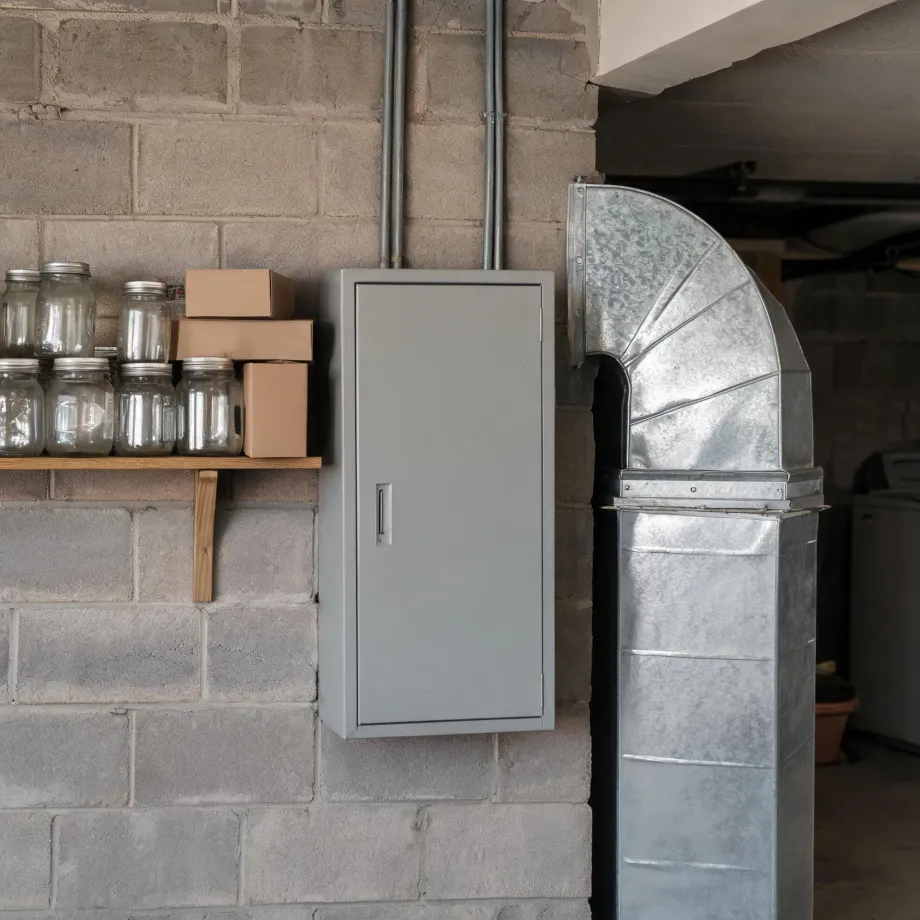
Ductwork that has been in place long enough to accumulate gaps, settled insulation, and worn seals changes what a repair job turns up. Half the homes in Dickey County, North Dakota were built in 1964 or earlier (2020-2024 ACS 5-year). A contractor opening a central AC system in housing like this finds that the condition of the lines and the ducts carrying the air often determines what the repair actually costs, not the unit's original specifications. Joints separate over time. Insulation compresses. A part that tests fine at the unit can still leave rooms warm if the delivery system has degraded around it.
The Parts of a Central AC a Contractor Checks First
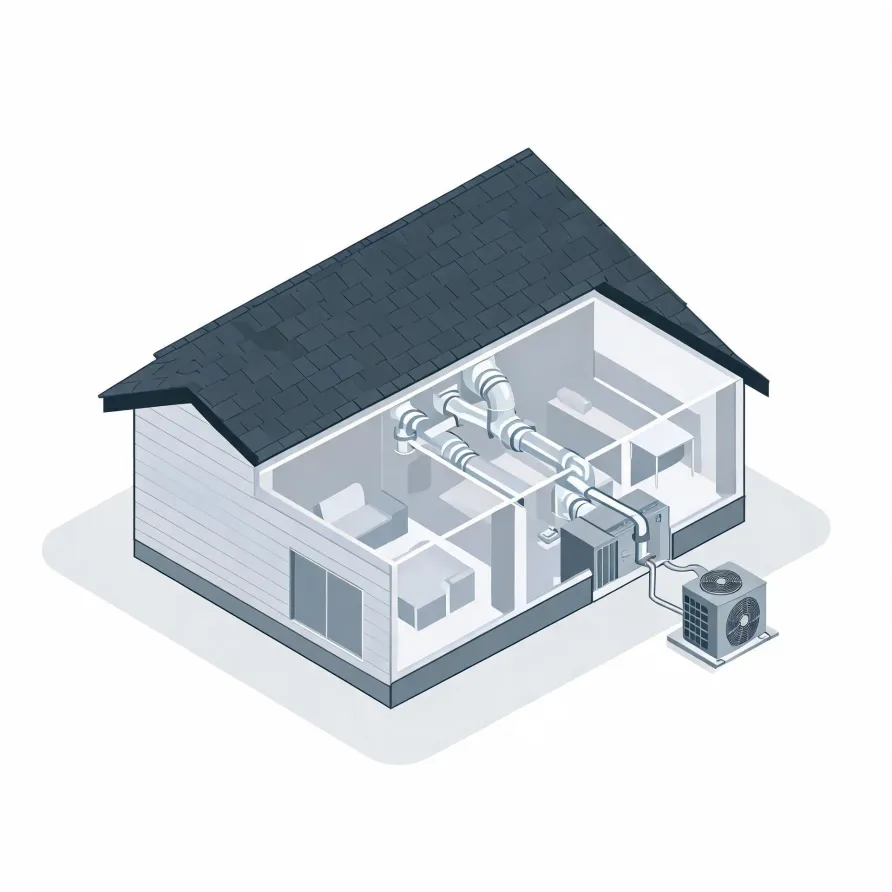
The outdoor condenser unit sits on a pad outside the house and is where the system sheds heat. A contractor will look here early, since a failed compressor, a dirty coil, or a seized fan motor inside this cabinet can stop the whole system cold. The indoor air handler or furnace-mounted evaporator coil lives inside, usually in a basement, closet, or attic, and is the other place refrigerant does its work.
The refrigerant lines run between those two units, and a leak anywhere along them will drop system performance before anything else seems obviously wrong. The thermostat, mounted on an interior wall, is the control signal the whole system answers to, and a faulty one can mimic a much larger mechanical failure.
The drawing shows the typical layout of these components, and a licensed contractor will determine exactly which parts apply to your home's setup.
Find a contractor in Dickey CountyDickey County, by the numbers
119 severe weather events were recorded in Dickey County, North Dakota between 2015 and 2024.
NOAA National Centers for Environmental Information, Storm Events Database, bulk CSV export, events 2015-01-01 through 2024-12-31.Half the homes in Dickey County, North Dakota were built in 1964 or earlier (2020-2024 ACS 5-year).
U.S. Census Bureau, 2020-2024 American Community Survey 5-Year EstimatesDickey County, North Dakota holds 2,394 housing units (2020-2024 ACS 5-year).
U.S. Census Bureau, 2020-2024 American Community Survey 5-Year EstimatesOwners occupy 79.7% of the occupied homes in Dickey County, North Dakota (2020-2024 ACS 5-year).
U.S. Census Bureau, 2020-2024 American Community Survey 5-Year EstimatesCodes & Standards Governing Central AC Repair in Dickey County, North Dakota9 sourced rules and standards
What happens when a contractor comes out
Split-system central air conditioners rated below 45,000 Btu/h manufactured on or after January 1, 2023 must meet a federal minimum of 13.4 SEER2.
Split-system central air conditioners rated at or above 45,000 Btu/h manufactured on or after January 1, 2023 must meet a federal minimum of 13.4 SEER2.
Split-system central air conditioners manufactured between January 1, 2015 and December 31, 2022 had to meet 13 SEER, the metric that preceded SEER2.
Single-package central air conditioners manufactured on or after January 1, 2023 must meet a federal minimum of 13.4 SEER2.
Space-constrained central air conditioners manufactured on or after January 1, 2023 must meet a federal minimum of 11.7 SEER2.
Federal efficiency standards for split-system central air conditioners and heat pumps are set on each certified combination of outdoor unit and indoor coil rather than on the outdoor unit alone.
Residential and light commercial air conditioning and heat pump systems assembled in the field, including mini-splits and unitary systems, may not be installed on or after January 1, 2025 using a refrigerant with a global warming potential above 700.
A field-assembled system whose specified components were all manufactured or imported before January 1, 2025 carries no installation compliance date under the refrigerant restrictions and may still be installed.
What Dickey County, North Dakota Requires for HVAC Repair
North Dakota requires a contractor licence once the cost, value or price of a job exceeds four thousand dollars, and an unlicensed contractor may not bring a claim or a lawsuit in a North Dakota court over the work.
Severe Weather Events in Dickey County
Weather puts direct stress on heating and cooling equipment, and that stress accumulates over time. Knowing what conditions the equipment here faces helps explain why local repair needs look the way they do.
119 severe weather events, 2015–2024. Source: NOAA National Centers for Environmental Information, Storm Events Database.