Tell us about the job
Takes about a minute. No obligation.
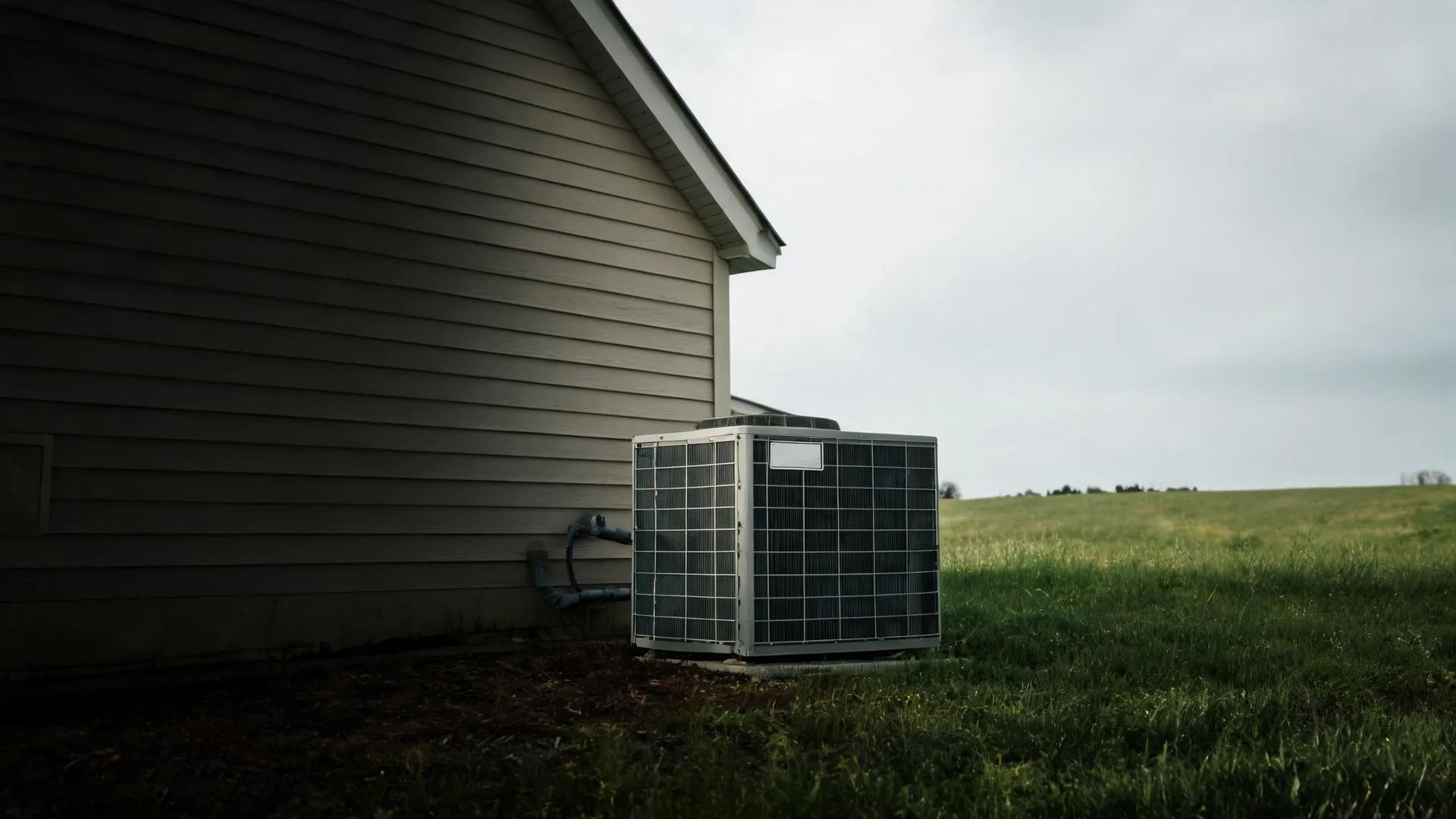
The compressor in a Kidder County central AC unit spends almost the entire year sitting idle. Homes in Kidder County, ND run cooling in a single month of the year, July. When a contractor opens the unit on a service call, what they find on the contactor points or inside the compressor itself reflects accumulated age rather than hard seasonal use, because the system has never had enough consecutive runtime to surface a developing fault early. A failing contactor or a compressor drawing too many amps on startup has usually been heading that direction for several off-seasons. The first hot week of July is when it finally shows.
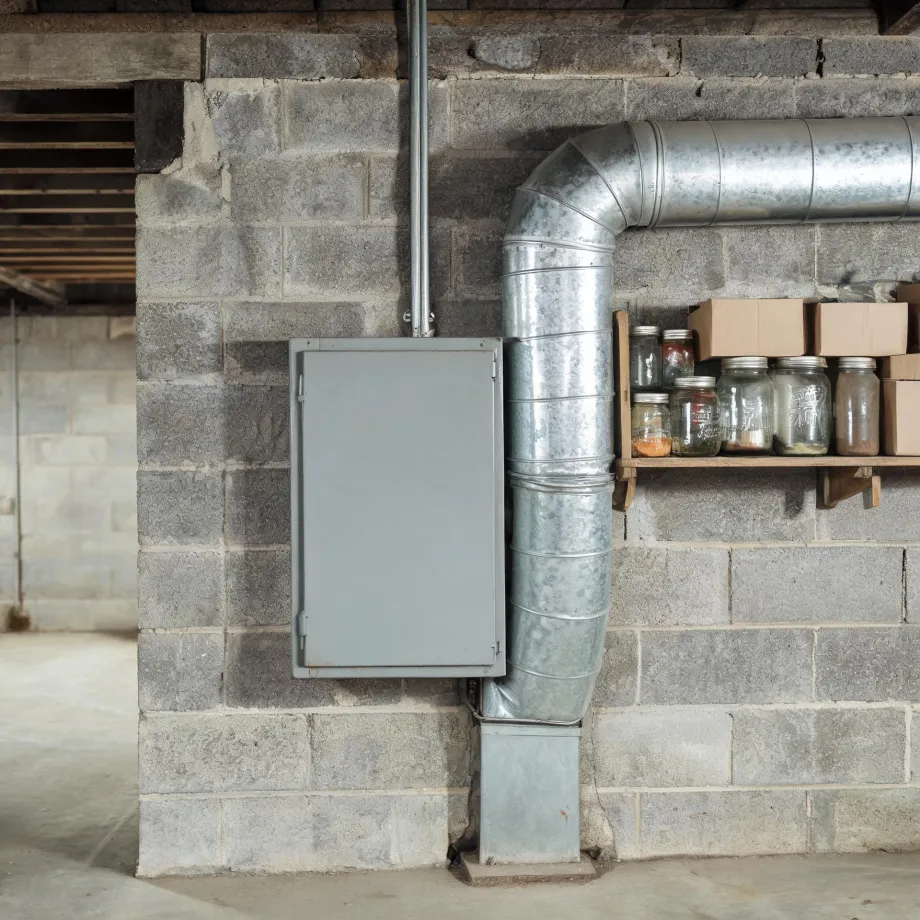
Ductwork in this county's homes was put in for whatever ran first, and what runs now has often changed more than once since then. Half the homes in Kidder County, North Dakota were built in 1970 or earlier (2020-2024 ACS 5-year). That history shows up inside the unit: compressors, capacitors, and contactors from the generations of equipment that followed the original install can sit outside the current supply chain entirely. A repair that looks routine from the outside can stall on a part that takes days to source or has no direct replacement at all.
The Parts of a Central AC a Contractor Checks First
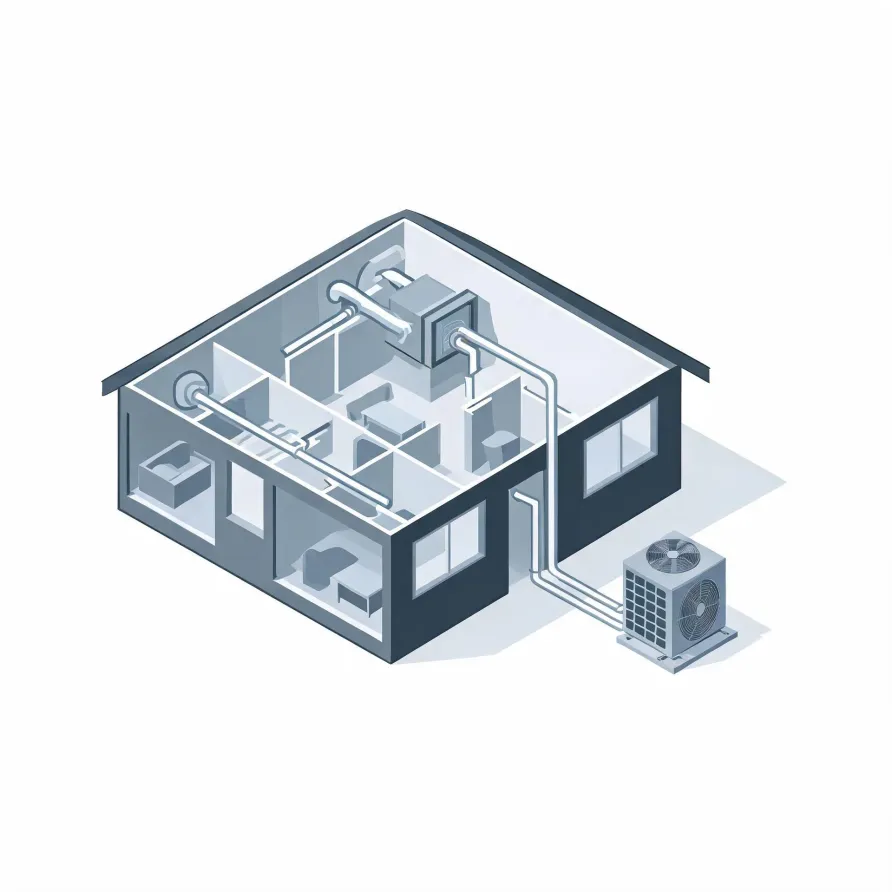
The outdoor condenser unit sits outside the house, usually on a concrete pad beside the foundation, and it carries the compressor and condenser coil. These are the pieces a contractor reaches first when a system stops cooling. A failed compressor or a coil that has fouled or corroded will shut down the whole system, which is why they draw attention early.
Inside the house, the air handler holds the evaporator coil and the blower fan, and it sits in a utility closet, attic, or basement depending on how the house was built. The refrigerant lines run between the two units, and the thermostat on the wall ties it all together by reading the temperature and telling the system when to run. A contractor working a repair call checks each of these for wear, blockage, or signal failure.
The drawing shows a typical central AC layout, and a licensed contractor determines which components apply and what condition they are in for your specific home.
Find a contractor in Kidder CountyKidder County, by the numbers
117 severe weather events were recorded in Kidder County, North Dakota between 2015 and 2024.
NOAA National Centers for Environmental Information, Storm Events Database, bulk CSV export, events 2015-01-01 through 2024-12-31.Half the homes in Kidder County, North Dakota were built in 1970 or earlier (2020-2024 ACS 5-year).
U.S. Census Bureau, 2020-2024 American Community Survey 5-Year EstimatesKidder County, North Dakota holds 1,660 housing units (2020-2024 ACS 5-year).
U.S. Census Bureau, 2020-2024 American Community Survey 5-Year EstimatesOwners occupy 76.1% of the occupied homes in Kidder County, North Dakota (2020-2024 ACS 5-year).
U.S. Census Bureau, 2020-2024 American Community Survey 5-Year EstimatesCodes & Standards Governing Central AC Repair in Kidder County, North Dakota9 sourced rules and standards
What happens when a contractor comes out
Split-system central air conditioners rated below 45,000 Btu/h manufactured on or after January 1, 2023 must meet a federal minimum of 13.4 SEER2.
Split-system central air conditioners rated at or above 45,000 Btu/h manufactured on or after January 1, 2023 must meet a federal minimum of 13.4 SEER2.
Split-system central air conditioners manufactured between January 1, 2015 and December 31, 2022 had to meet 13 SEER, the metric that preceded SEER2.
Single-package central air conditioners manufactured on or after January 1, 2023 must meet a federal minimum of 13.4 SEER2.
Space-constrained central air conditioners manufactured on or after January 1, 2023 must meet a federal minimum of 11.7 SEER2.
Federal efficiency standards for split-system central air conditioners and heat pumps are set on each certified combination of outdoor unit and indoor coil rather than on the outdoor unit alone.
Residential and light commercial air conditioning and heat pump systems assembled in the field, including mini-splits and unitary systems, may not be installed on or after January 1, 2025 using a refrigerant with a global warming potential above 700.
A field-assembled system whose specified components were all manufactured or imported before January 1, 2025 carries no installation compliance date under the refrigerant restrictions and may still be installed.
Licensing and Legal Requirements in Kidder County, North Dakota
North Dakota requires a contractor licence once the cost, value or price of a job exceeds four thousand dollars, and an unlicensed contractor may not bring a claim or a lawsuit in a North Dakota court over the work.
Severe Weather Events in Kidder County
Weather places real mechanical demands on central AC equipment, and those demands shape how often repairs are needed and what kind. Knowing the local pattern gives homeowners and contractors a shared baseline for making decisions about service.
117 severe weather events, 2015–2024. Source: NOAA National Centers for Environmental Information, Storm Events Database.