ND Central Air
Profile view of a bearded man wearing a dark green baseball cap and a dark gray T-shirt against a plain light background.

How to lower your AC bill in a North Dakota summer

Step 1 of 3: Equipment

How can I lower my AC bill this summer in North Dakota?

North Dakota summers don't put the strain on an AC that humid states do, so when the bill still climbs, it's natural to wonder where the money is going. The unit isn't fighting heavy air here. Something else is driving the cost, and most of it comes down to how clean and tuned the system is, not how hot it gets outside.

Keep the coil and filter clean, and the system won't have to work as hard

A dirty filter or a coil caked with dust makes the system run longer to move the same amount of air, and longer runtime is what shows up on the bill. Power is cheap in North Dakota, so the cost per hour of running isn't the problem. The problem is hours. A unit that's clean inside and has the right refrigerant charge cools the house and shuts off. One that's neglected keeps running past the point it should, pulling power the whole time. A maintenance visit checks the coil, the filter, and the charge, and that's usually where the savings is, not in the thermostat setting.

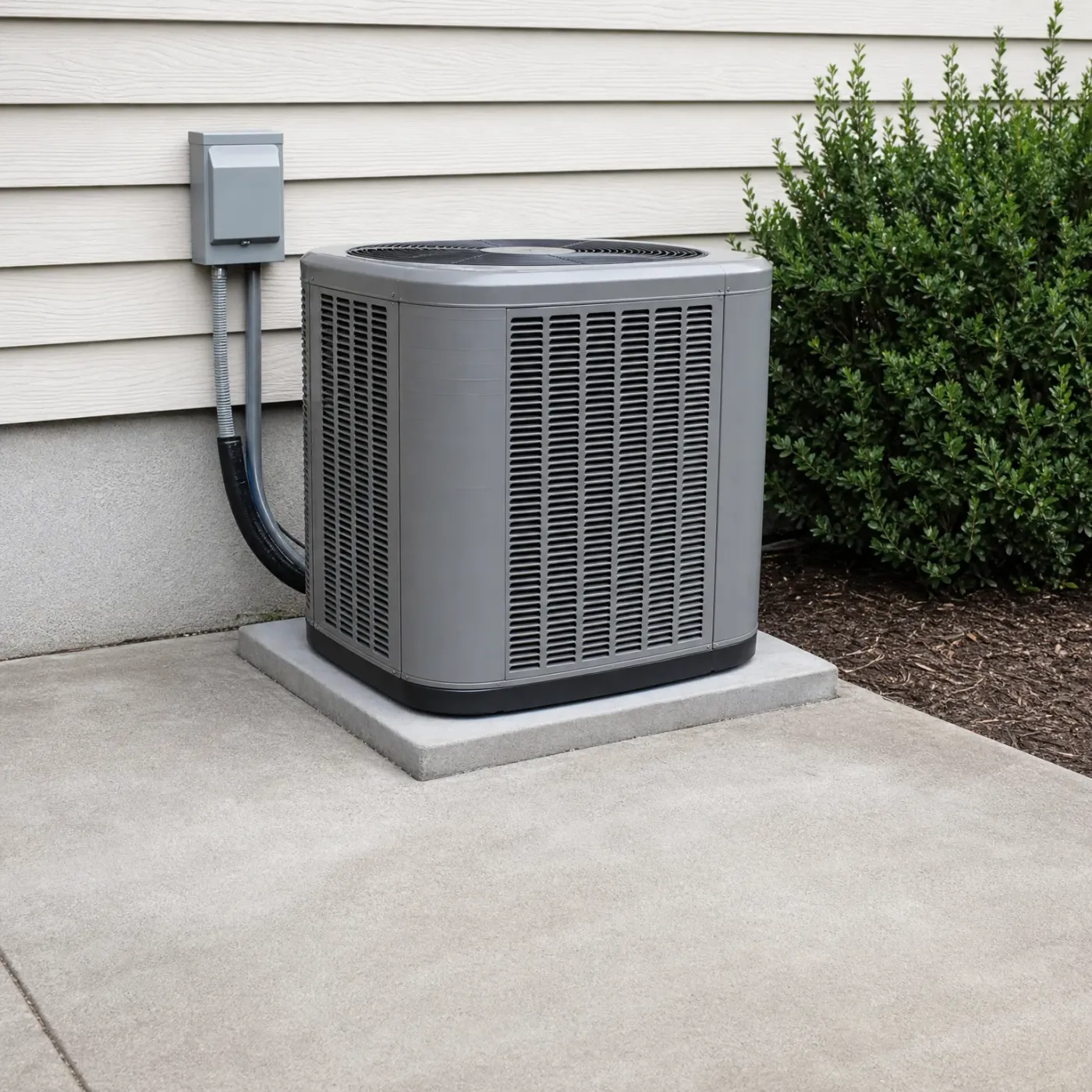
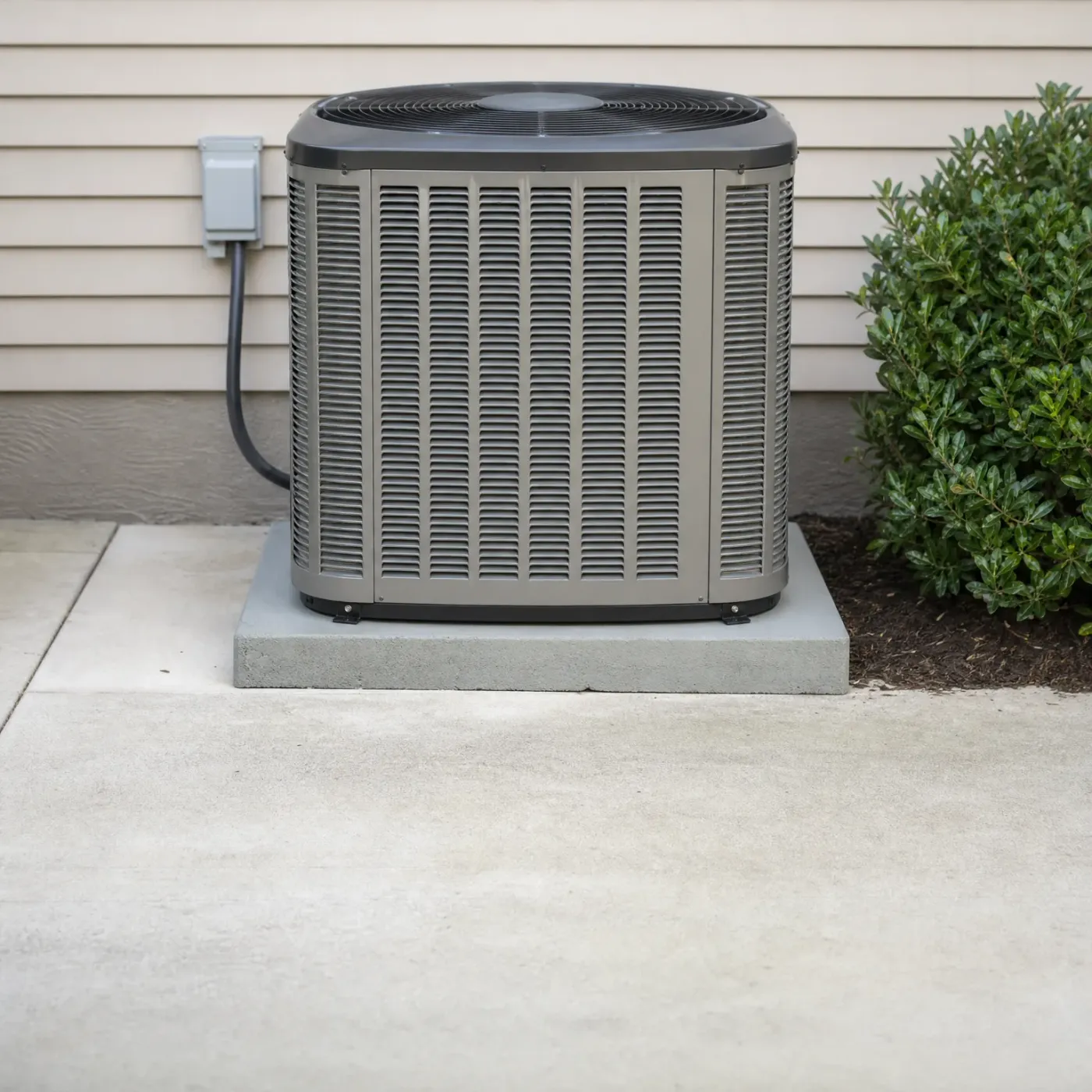
A gray outdoor air conditioner condenser unit on a concrete pad beside a house with light vinyl siding, with an electrical disconnect box and conduit on the wall and a leafy shrub with dark mulch to the right.

Running clean

Air moves through the coil without resistance and the unit cycles off once the house reaches temperature. Refrigerant lines and wiring run straight from the condenser to the disconnect, nothing blocking the grille, nothing for the fan to fight.
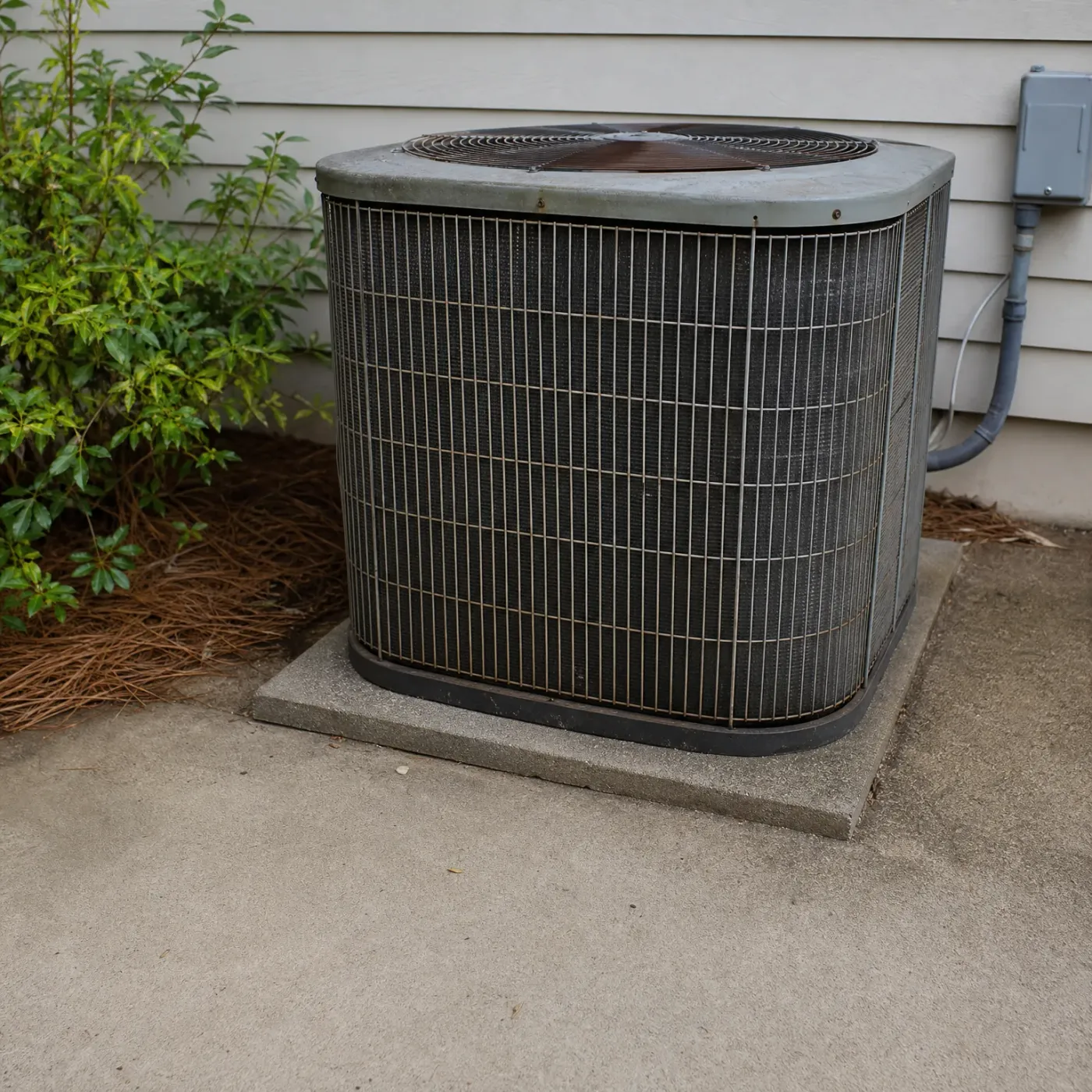

An outdoor air conditioner condenser unit on a concrete pad beside a house with horizontal lap siding, with a gray electrical disconnect box and conduit on the wall and a green shrub over pine-needle mulch at left.

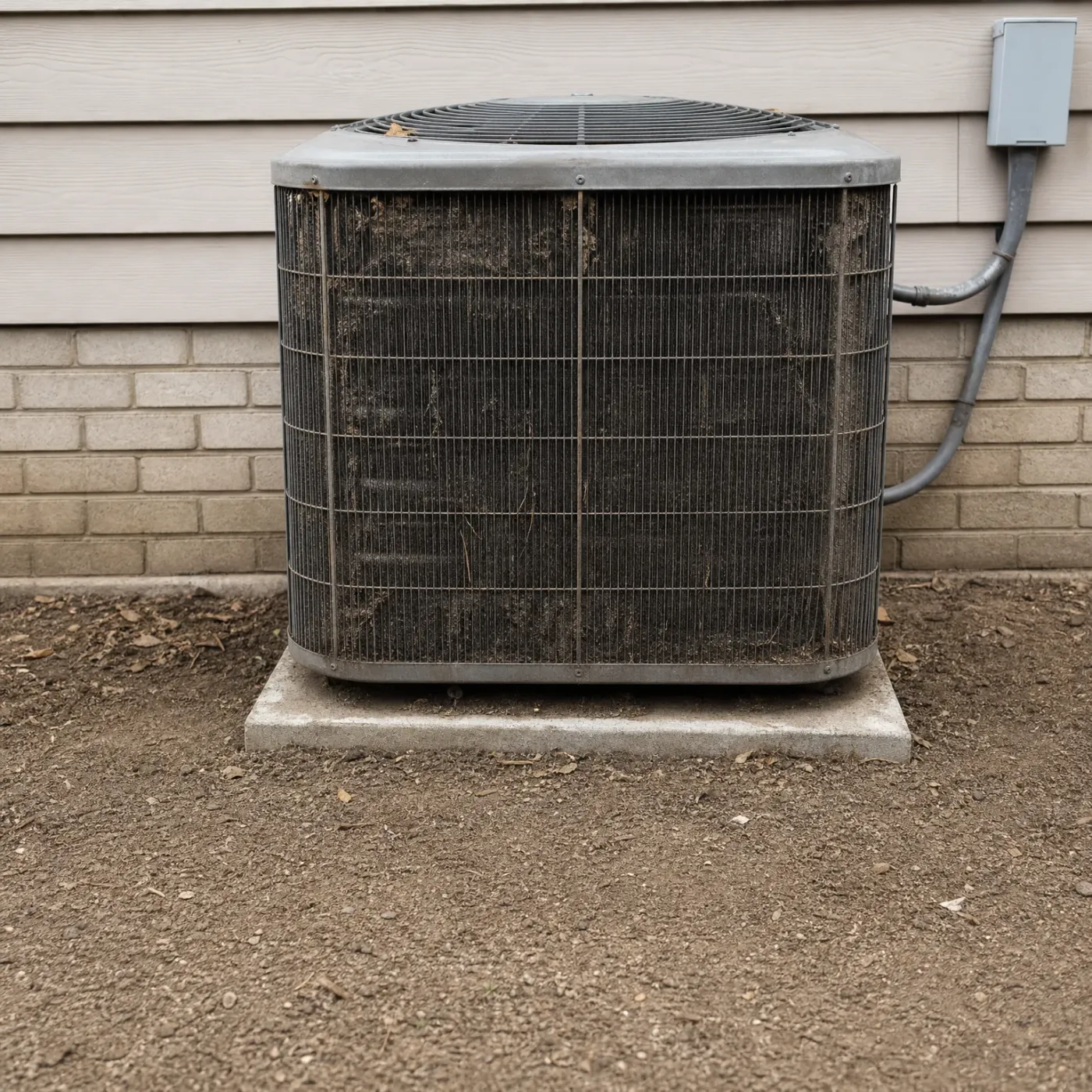
Working harder than it should

That grille is caked with mulch and weathered dirt, and a dirty coil makes the compressor run longer to move the same amount of heat. Mounted outside, it collects this gradually, and nothing tells you until the bill shows it.

A smiling woman with dark shoulder-length hair in a cream V-neck sweater sits at a marble counter with a glass of red wine, with a kitchen and softly lit living room behind her.
A woman in a dark green sweater laughs while seated at a marble kitchen island with a glass of red wine, with open shelving, cabinets and a living room visible behind her.
A woman with long dark hair in a cream knit sweater laughs while looking off to the side, seated at a counter with a glass of red wine, in a dimly lit living room with a sofa, lamp, framed pictures and houseplant behind her.
A smiling woman with long dark hair in a beige sweater sits at a marble kitchen counter with a glass of red wine, with a dimly lit living room behind her.

Dirty coil, longer runtime

A coil caked with dust can't shed heat well. The compressor runs longer to reach the same temperature, and that extra runtime shows up on the bill.

Get a licensed local pro

One visit, checked over

A local contractor who works on these units every summer can check the coil, the charge, and the wiring in a single visit instead of guessing.

Get a licensed local pro

Let it ride or get it looked at

Skip it

  • Dust keeps building on the coil every week the unit runs, and nothing reverses that on its own.
  • The compressor runs longer to hit the same temperature, and that extra runtime is what shows up on the bill.
  • A clogged filter restricts airflow further, so the coil works harder and collects dirt faster.
  • Small problems like a weak contactor or a low refrigerant charge don't announce themselves until the unit struggles or quits in July.
  • Without a baseline check, you won't know if this summer's bill jump is normal for the weather or a sign the unit is working harder than it should.

Get it checked

  • A contractor who services these units every summer knows what usually fails first and checks that before anything else.
  • Cleaning the coil restores airflow, so the compressor doesn't have to run as long to cool the same house.
  • A tech can catch a weak capacitor or a low charge before it turns into a bigger repair in August.
  • You deal with one local contractor, not a handful of companies calling you back with different quotes.
  • A visit gives you a straight answer on whether this year's bill reflects normal summer weather or a unit losing efficiency.
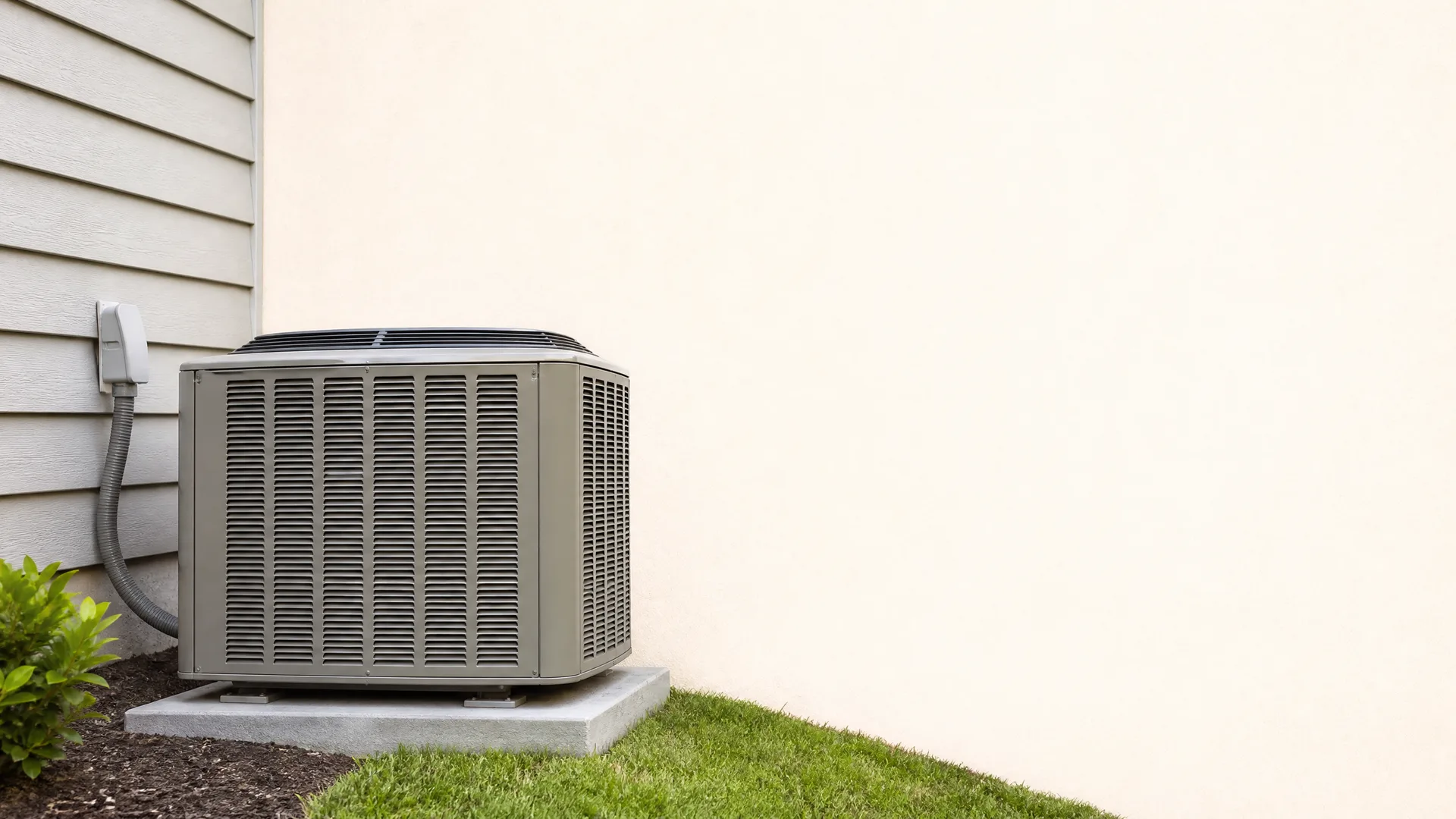
An outdoor air conditioning condenser unit on a concrete pad at the corner of a house, next to vinyl siding and a plain light-colored wall, with grass and a mulch bed in the foreground.

What a dirty filter costs you

A filter clogged with dust makes the blower work harder to push the same amount of air through the house. The thermostat takes longer to see the drop in temperature it's waiting for, so the compressor keeps running past the point it should have shut off. You notice it as rooms that take longer to cool on the hot afternoons, and as a bill that climbs even though you haven't changed the thermostat setting at all.

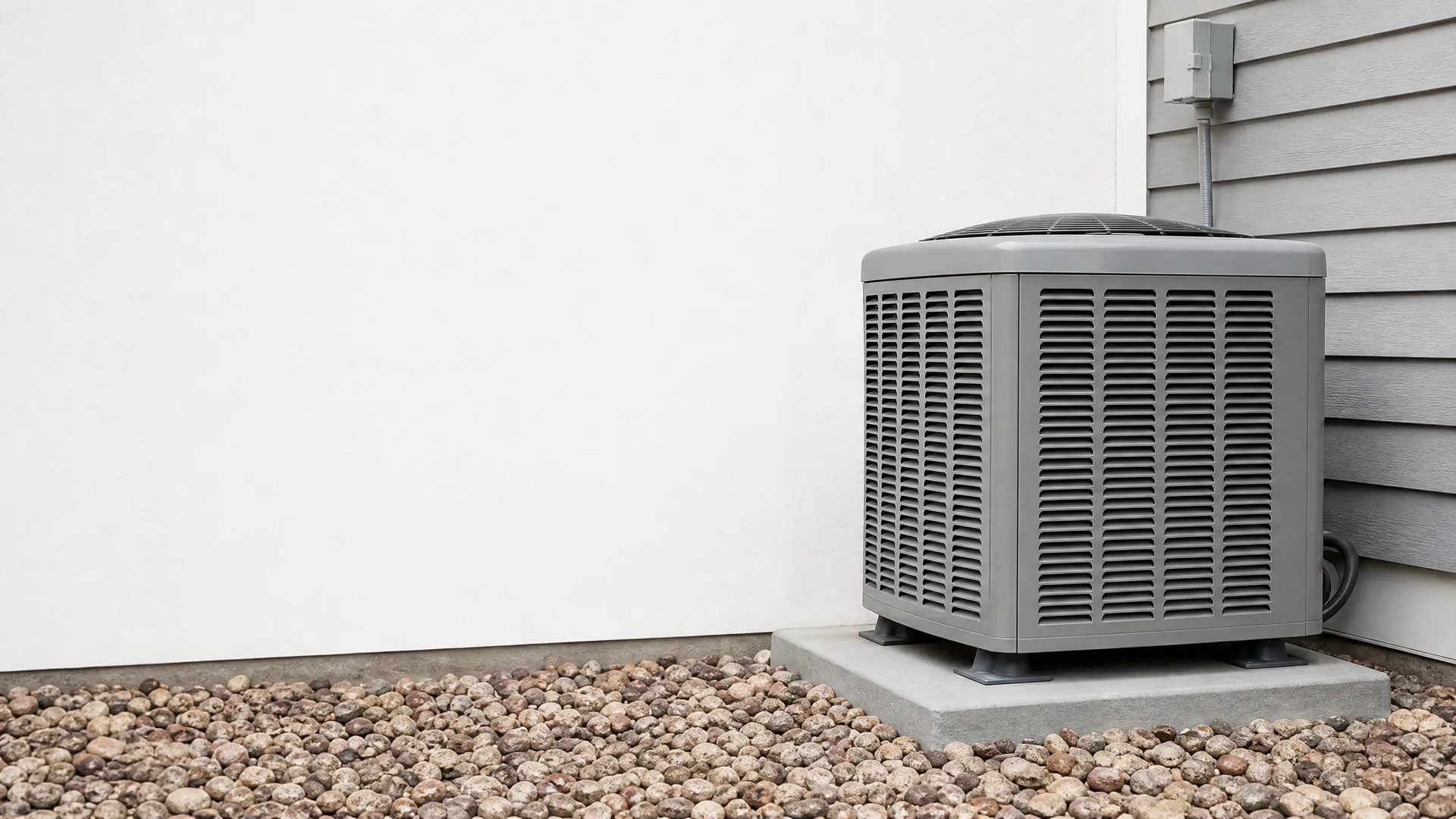
A gray outdoor air conditioning condenser unit sits on a concrete pad beside a white stucco wall and gray horizontal siding, surrounded by rounded landscaping gravel, with an electrical disconnect box mounted on the siding above.

What it means for the unit

An AC working harder than it needs to wears down faster than one that isn't. The compressor is the most expensive part to replace, and the one most affected by months of extra runtime. A unit that's been cycling long and often by August has had more wear than one that's been running clean, and that difference shows up eventually, either in a repair call or in how many summers the unit has left before it needs replacing.

A closed dark laptop and a ceramic mug of coffee on a wooden dining table, with wooden chairs, a dark kitchen cabinet with cutting boards and a potted plant, and a leafy plant by a window in the background.

What happens inside the unit when it starts up

When the thermostat calls, the compressor and the outdoor fan start together. Refrigerant moves out to the condenser coil, gives up its heat to the outside air, and comes back inside to pull heat out of your house. That whole cycle depends on the coil being able to shed heat fast. If a service tech has checked the capacitor, cleaned the coil, and confirmed the refrigerant charge is where it should be, the compressor shuts off as soon as the house hits temperature and stays off until it's called again.

A local contractor who works on these units all summer has usually seen what fails first on this model or one close to it, so the visit moves faster than it would with someone unfamiliar with the equipment. That's one call, one visit, instead of getting a handful of companies out to quote the same job, repeating what's wrong to each one, and sorting through different answers to figure out who actually knows your system.

Interior corner with a beige sofa holding a dark green and a light cushion and a textured throw, a potted small-leaved tree beside a white-framed window, and a dark shallow bowl on a wooden coffee table in the foreground.
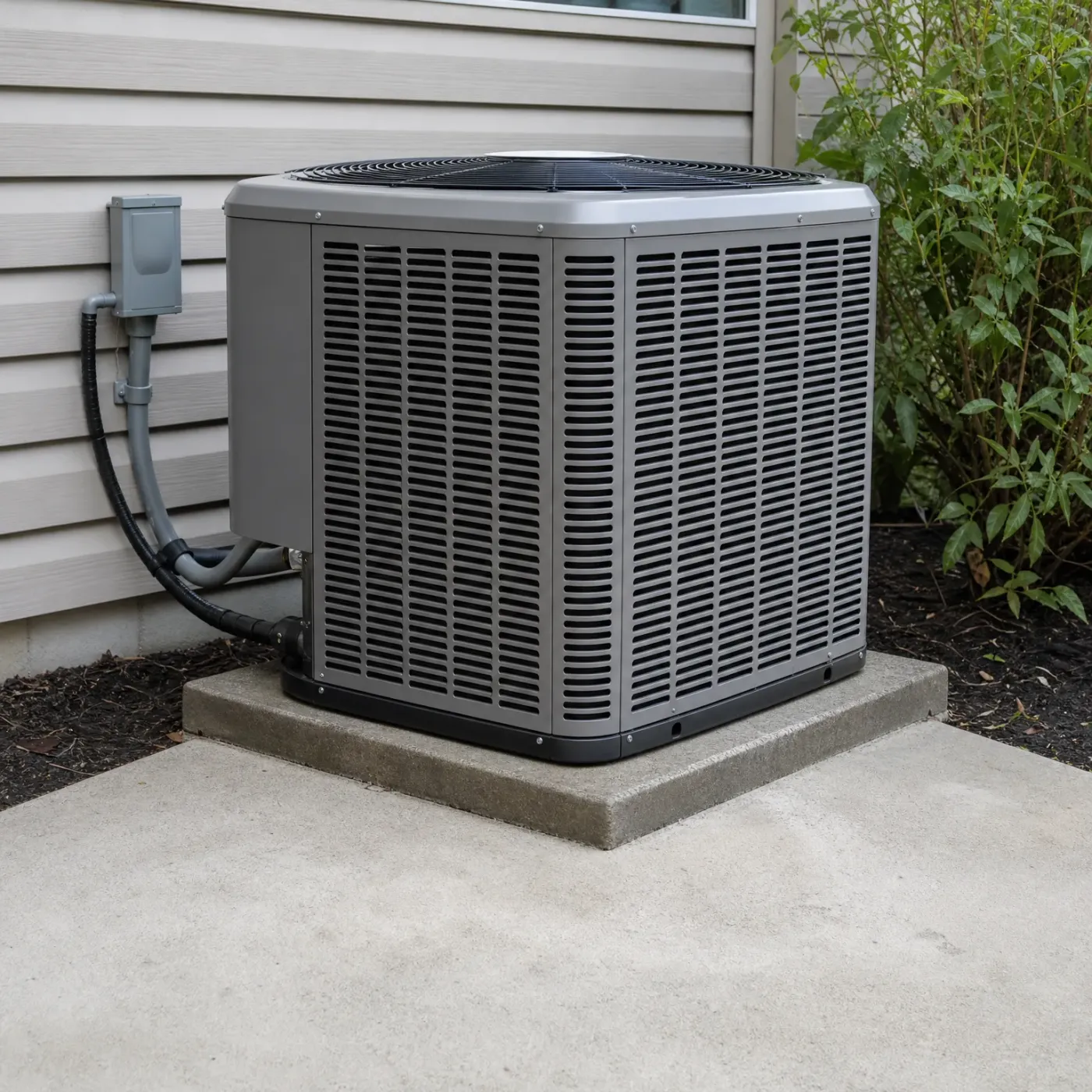
A gray outdoor air conditioning condenser unit on a concrete pad beside a house with horizontal lap siding, with a wall-mounted disconnect box and conduit to the left and a green shrub with mulch to the right.

Clear coil, open airflow

Air passes straight through the fins and out the top, no resistance anywhere. The lines and wiring run down to the disconnect with nothing in the way, nothing for the fan to fight. The unit reaches your set temperature and shuts off like it's supposed to.

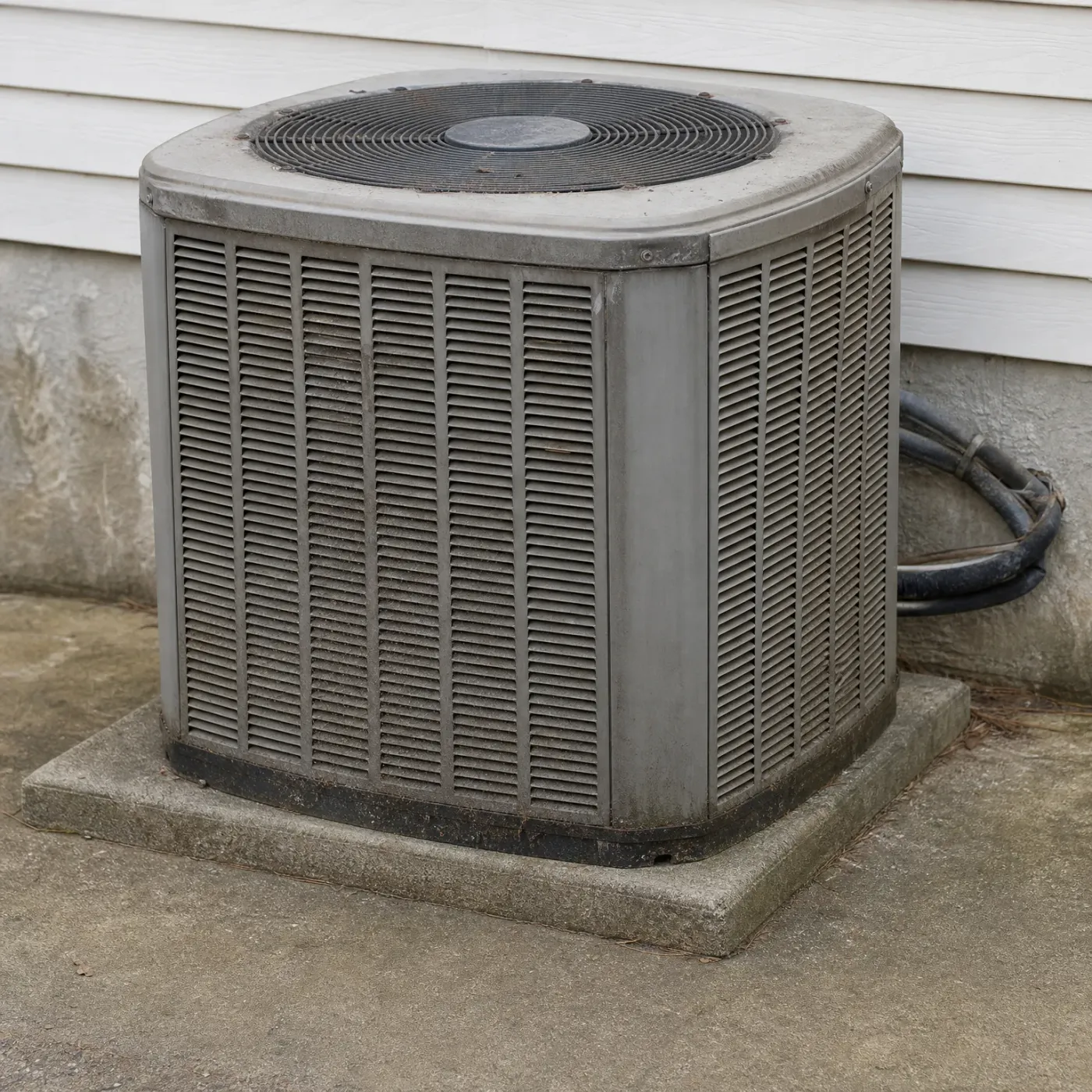
A dirty outdoor air conditioning condenser unit on a concrete pad beside a house wall with horizontal siding above a painted brick foundation, with a gray electrical disconnect box and conduit on the wall.

Caked coil, struggling fan

Dirt and grime pack the fins so tight the unit can't shed heat the way it needs to. The fan and wire cage are coated, not just dusty. That coil has to work through all that buildup before it can even start cooling your house, and the compressor pays for it in runtime.

A bearded man in a dark navy sweater over a collared shirt smiles and looks off to the side while seated at a dinner table with a glass of red wine, a lit candle, and a plate of food in the foreground of a dimly lit room.
A woman in a dark gray sweater reclines on a couch with her eyes closed and a knit blanket over her lap, an open book resting face-down in front of her, with a lit table lamp and shelving blurred in the background.

One form, no calling around

You could spend an afternoon calling around, telling each company the same thing about the coil and the runtime, then waiting on quotes to compare before you even get someone out to look at it. Or you could send this request once and let a local contractor who services these units every summer take it from here. Someone who works on North Dakota systems all season knows what a dusty coil or a weak capacitor looks like before they pull the panel off, because they've seen the same thing on the unit next door. You're not fielding calls from five companies trying to win the job. One contractor gets your request, already knowing roughly what they're walking into. That's worth something when your bill is climbing for no reason you can see from the thermostat, and the fix is likely something straightforward that a trained eye catches in one visit. Your AC doesn't need to keep running longer than it has to.

A two-story house with gray and light gray siding, white-trimmed windows and a white front door, flanked by deciduous trees, with a partly browned lawn in front under a clear blue sky.

A summer dew point averaging 53°F is why North Dakota air doesn't sit heavy, that figure comes from weather data averaged across June, July and August for where homes here sit. Your AC isn't pulling much moisture out of the air to begin with, so the compressor isn't working against that the way it would further south. Most of what it's fighting is just heat, and how well it moves air past a clean coil and through a clear filter. That's where the runtime difference shows up, not in the humidity.

NASA POWER T2MDEW county cells weighted by homes

An outdoor air conditioner condenser unit on a concrete pad beside a house with horizontal siding and a lower concrete foundation wall, with coiled refrigerant lines at right.
Before you get your air conditioner maintenance
An outdoor air conditioning condenser unit on a concrete pad beside a house with horizontal lap siding, with an electrical disconnect box and conduit on the wall and a green shrub to the right.
After you get your air conditioner maintenance

Skipping maintenance this year

Dust keeps settling on the coil every week the unit runs, and the fan and electrical connections get no one checking them. Nothing about that reverses on its own. The compressor keeps working harder than it needs to, and the unit still gets you through the summer, but every degree of extra strain on the coil shows up on the bill before August is over. If a part is wearing down, nothing tells you until it fails on a 90 degree day.

Getting it looked at now

A contractor who services these units all summer can clean the coil, check the refrigerant charge, and test the electrical connections before any of it turns into a bigger repair. You find out now if a part is wearing down instead of guessing later. The unit runs the way it did when it was new, cycling off once the house hits temperature instead of running long past it. One visit, and you know what you're dealing with for the rest of the summer.

Power costs 11.82 cents per kilowatt-hour statewide

At 11.82 cents per kilowatt-hour, every extra hour your compressor runs to push air through a dirty coil or filter lands on your bill at that rate. Power here is cheap compared to most of the country, so the real cost isn't the rate. It's the runtime a unit works up when something inside it is restricting airflow.

EIA-861 2025 statewide residential average

The bill isn't climbing because of North Dakota air. It's climbing because a dirty coil or a clogged filter makes the compressor run longer to do the same job, and nothing about that fixes itself. A maintenance visit gets the coil clean, the filter checked, the fan and wiring looked over, and the unit back to cycling off when it should instead of grinding through extra runtime. The contractor who comes out is local and works on these units every summer, so they've seen what usually goes wrong on equipment like yours before they ever ring your doorbell. You're not explaining your situation to one company, then another, then a third. One contractor gets the request, looks at your unit, and tells you what it needs. Your AC was never working against heavy air here. Whatever it's been working against is the thing a tech can actually find and fix.

A covered porch with a wood front door with six upper glass panes, a lantern wall sconce, tapered column on a stone base, potted ferns and flowers, a woven doormat, and wide steps leading to a paver walkway bordered by shrubs and white hydrangeas.
A beige upholstered sofa with a cream cushion and chunky knit throw sits beside a white-framed window, with a leafy potted plant in a stone vase against a tan wall.
Sunlit corner of a room with a linen curtain beside a window, built-in shelves holding ceramic vases, wooden bowls, a potted green plant, stacked books and a woven basket, above a textured rug.
A dark wood three-drawer dresser against a pale wall holds a tall ceramic vase with leafy branches, stacked books and a shallow bowl, with a framed print above, a woven basket on the wood floor at left, and an upholstered sofa with a green pillow in the foreground.
A cream upholstered sofa with a textured ivory cushion and a rust-colored cushion sits beside a window with sheer linen curtains, with a potted leafy plant behind it and a wooden bowl on a wood table in the foreground.

Skip the search

Your request stays with one local pro.

Find a licensed air conditioner pro

There's no charge for the request.