Get in touch with a local installer about a new air conditioner.
Your summers in North Dakota don't bring the heavy, wet air that makes other parts of the country miserable. Heat here is drier, and that changes the math on a variable-speed air conditioner before you even get to the price tag.
Variable-speed compressors earn their keep by running long and low, pulling moisture out of the air hour after hour instead of blasting cold air and shutting off. That matters most where humidity sits high all summer. Where you live, with gas heat covering winter and power priced low, the usual case for one of these systems loses some of its weight.
That doesn't mean the answer is no for every house. It depends on how your home holds heat, how your ductwork is laid out, and whether a single-stage or two-stage unit might do the same job for less. Those are things worth having someone look at in person, not guess at from a search box.
A contractor who installs AC systems in North Dakota winters and summers both knows which units hold up here and which ones are overbuilt for a climate like this. They've seen what actually fails and what actually gets used in a house like yours, and they can walk your attic, your ducts, and your current setup before telling you what fits.
When you request a match through this page, you're connected with one licensed, local contractor, not a handful of companies competing for your attention. That contractor reaches out to you directly, looks at your specific situation, and tells you straight whether a variable-speed system is worth the difference for your house or whether your money is better spent elsewhere.
The rest of this page walks through what variable-speed systems actually do and where they tend to pay off. But the real answer depends on your house, and that's a conversation, not a search result.
Is a variable-speed air conditioner worth it in North Dakota?
You're looking at a variable-speed air conditioner and trying to figure out if it makes sense here, or if a standard single-stage unit does the job just as well for less money. North Dakota summers are warm but dry, and that's a different situation than what most reviews and articles about variable-speed systems are written for.
For most North Dakota homes, a single-stage or two-stage AC is the better value
A variable-speed compressor earns its keep by running long, low stages that pull moisture out of thick, humid air over many hours. North Dakota doesn't give it that work to do. Summers here are warm without the heavy humidity, so the air doesn't hold the kind of moisture that variable-speed systems are built to manage. With gas heat covering winter and power priced low, the yearly savings a variable-speed unit might add over a quality two-stage system are small compared to places with long, muggy summers. A two-stage or single-stage AC, sized and installed correctly, will cool a North Dakota home just as well for most households. Variable-speed still has a place if you want the quietest possible operation or have specific humidity concerns indoors, but it isn't the default upgrade here that it is in wetter climates.
Single-stage, running fine
A single-stage condenser cycles on at full output and shuts off once the house cools down. In dry North Dakota air it does that job without much strain, and on a mild evening you'd be hard pressed to tell it apart from a variable-speed unit sitting right next to it.
Short-cycling in the heat
On the hot stretch of July afternoons, a single-stage unit kicks on, cools fast, shuts off, then kicks on again a few minutes later. That constant starting and stopping is where a variable-speed compressor would instead settle in and run low and steady, which a licensed installer can walk you through before you decide.
What variable speed actually changes
A single-stage compressor has two settings: off and full blast. A variable-speed compressor can run at a fraction of that, sometimes as low as 25 percent of full capacity, and hold there for hours. That matters most in long, humid heat, when a system needs to run low and slow to pull moisture out of the air without overcooling the house. North Dakota's dry summer air doesn't ask for that kind of moisture control. The compressor spends more of its time either off or running near full output anyway, so the low-end range a variable-speed unit offers goes mostly unused here.
Where the real difference shows up
Variable-speed systems do run quieter and hold a steadier temperature, since they're not slamming on and off like a single-stage unit does. If that's what you want, it's a real reason to install one, separate from the climate argument. But match it to a furnace or air handler that can actually use a variable-speed blower, since the gains come from the whole system working together, not the compressor alone. With gas heat common here and electricity cheap, the energy savings that justify the higher cost in muggy climates carry less weight on a North Dakota bill either way.
Before you get your air conditioner installationAfter you get your air conditioner installation
25 percent capacity
That's as low as a variable-speed compressor can throttle down to on a mild day, running long and quiet instead of cycling on and off like a single-stage unit does.
With electricity rates low in North Dakota, the energy savings a variable-speed compressor offers take longer to add up against a bigger install cost than they would somewhere with higher rates.
Summer air in North Dakota averages a 53°F dew point across June, July and August, according to NOAA climate data. That's dry air by any measure, the kind that doesn't force a compressor to work for long stretches pulling moisture out before the house feels cool. A single-stage unit sized right for your home will keep up fine. Where it pays to get someone qualified involved is sizing and setup, since an oversized or poorly matched system in dry air like this short cycles and wastes the advantage the climate already gives you. A local contractor who installs air conditioners in this kind of air every summer knows how to size one so it runs the way North Dakota air lets it run.
Your request goes to one pro, not a list of companies.
You're not committing to anything by asking.
If humidity were high here, the slow, steady run of a variable-speed compressor would earn its keep pulling moisture out of the air hour after hour. That's not the air you have.
With a 53°F dew point most summer days, a single-stage unit already cools the house and leaves without a damp feel behind. The upgrade is paying for a problem North Dakota doesn't give you.
Power costs 11.82 cents per kilowatt-hour statewide
At 11.82 cents per kilowatt-hour, running your air conditioner in North Dakota costs less than it does almost anywhere else in the country. That changes what a variable-speed compressor can realistically save you on the power bill. Paying more upfront for one makes less sense when the electricity it's trying to save is already cheap.
EIA-861 2025 statewide residential average
Running clean
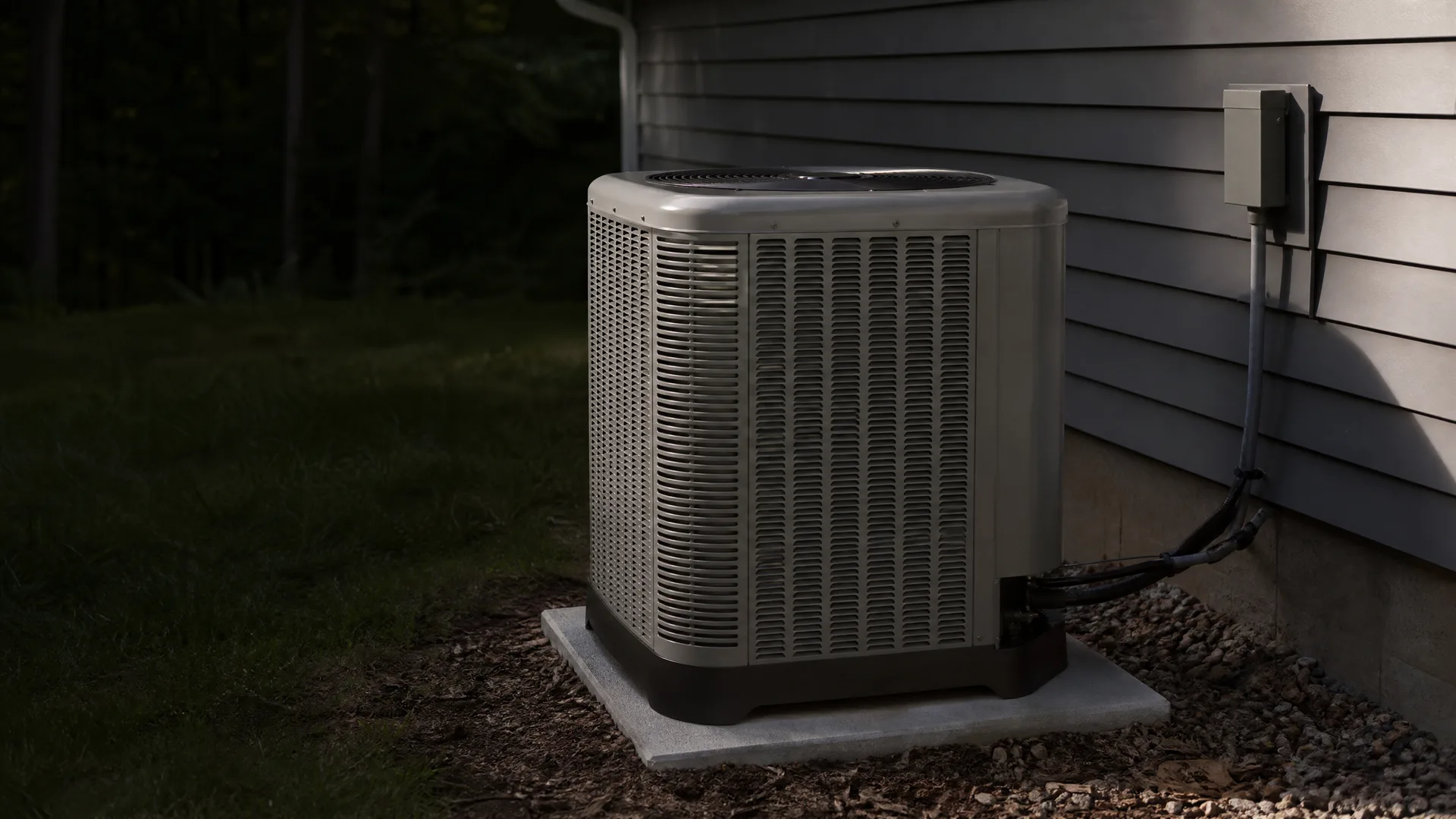
This condenser cycles on, cools the house, and shuts off, with nothing standing in its way. The grille is clear, the lines run straight to the disconnect, and air moves through it the way it was built to. A unit kept this way holds its efficiency for years.
Running dirty
Dirt packed into the grille and across the top cover blocks the airflow this unit needs to shed heat. It still runs, but it works harder to do the same job, and in dry North Dakota air that strain comes from neglect, not the climate. A unit in this shape is worth having looked at before you decide what to install next.
Variable-Speed or Single-Stage AC
Variable-speed
Costs more to install than a single-stage unit, and that gap is the main thing you're weighing against any savings on your power bill.
Runs long and quiet at low capacity on mild days, so you won't hear it kick on and off the way a single-stage unit does.
Has more parts involved in modulating output, which gives a contractor more to check if something goes wrong years down the line.
Holds a steadier temperature through the house since it's rarely running at full output, even though North Dakota's dry air doesn't demand that steady pull the way humid climates do.
Needs a contractor who's installed variable-speed systems before, since the thermostat and electrical setup aren't the same as a single-stage swap.
Single-stage
Costs less upfront, and with electricity here running 11.82 cents per kilowatt-hour, the power bill gap won't close that difference fast.
Cycles on at full output and shuts off once the house cools, which is a shorter, simpler job for whoever installs or later repairs it.
Has fewer components, so there's less for a local contractor to diagnose if the unit stops cooling.
Already matches the job in North Dakota, where a 53°F summer dew point means the air isn't forcing long runtimes to begin with.
Is the unit most contractors in the area install and service regularly, so parts and know-how aren't hard to come by.
1
Thermostat calls for cooling and signals the outdoor unit to start.
2
Compressor ramps up to only the capacity the house needs.
3
Indoor blower matches its speed to the compressor's output.
4
System holds a low, steady speed instead of shutting off.
A clear coil lets this unit pull in air the way it was built to, whether it's single-stage or variable-speed.
Dirt packed into the coil grilles makes any compressor work harder, and on a variable-speed unit that erases the low, steady running it's built for.
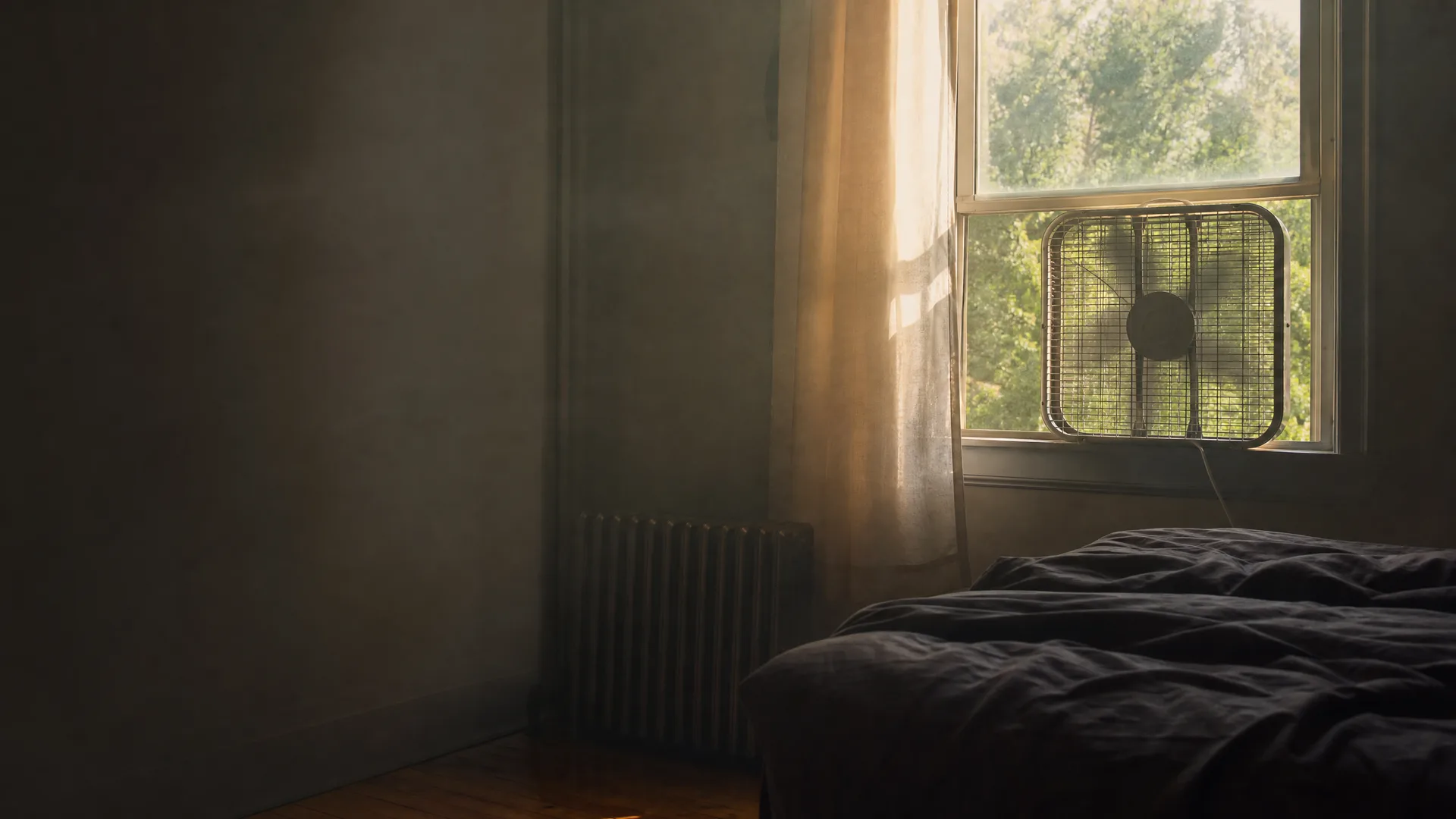
It's past eight but still light out, that long June dusk North Dakota gets. The upstairs bedroom is close to eighty, air sitting still against the ceiling. A box fan is wedged in the open window, pulling in whatever's moving outside, pushing the heat around more than it clears it. The single-stage unit downstairs kicked off twenty minutes ago, satisfied, and the house has started climbing again since. You lie on top of the sheets. The air coming through the window doesn't feel heavy, just warm, dry enough that a ceiling fan would probably do more good than the box fan is. It's not unbearable. It's just a slow, sticky hour before the house catches up to the night.
A single-stage air conditioner does the job in North Dakota's dry summer air, and that's the honest answer. Dry air doesn't ask much of a compressor, and most houses here get cooled just fine without one that can throttle down to a quarter capacity. Where a variable-speed unit earns its cost is harder to say in general terms, because it depends on your house, your ductwork, and what you want out of the system beyond just cooling it down. That part is worth working through with someone who installs these units in North Dakota homes all summer and knows which jobs call for variable-speed and which don't need it. When you request a quote, you're matched with one licensed local contractor, not a handful of companies competing for your callback, and that contractor can look at your house directly and tell you what actually fits it. You'll know where you stand once someone's seen the place.