

ND Central Air
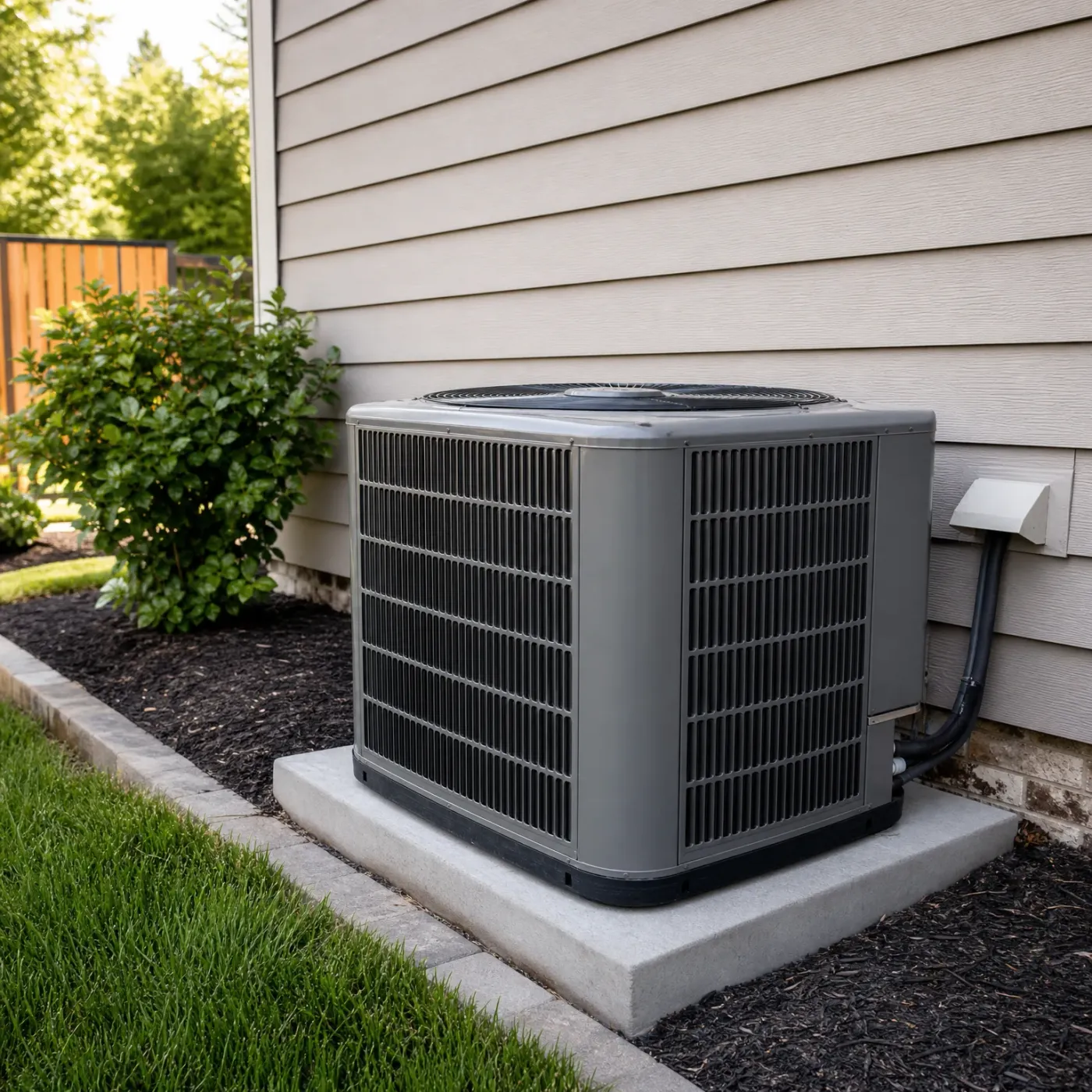
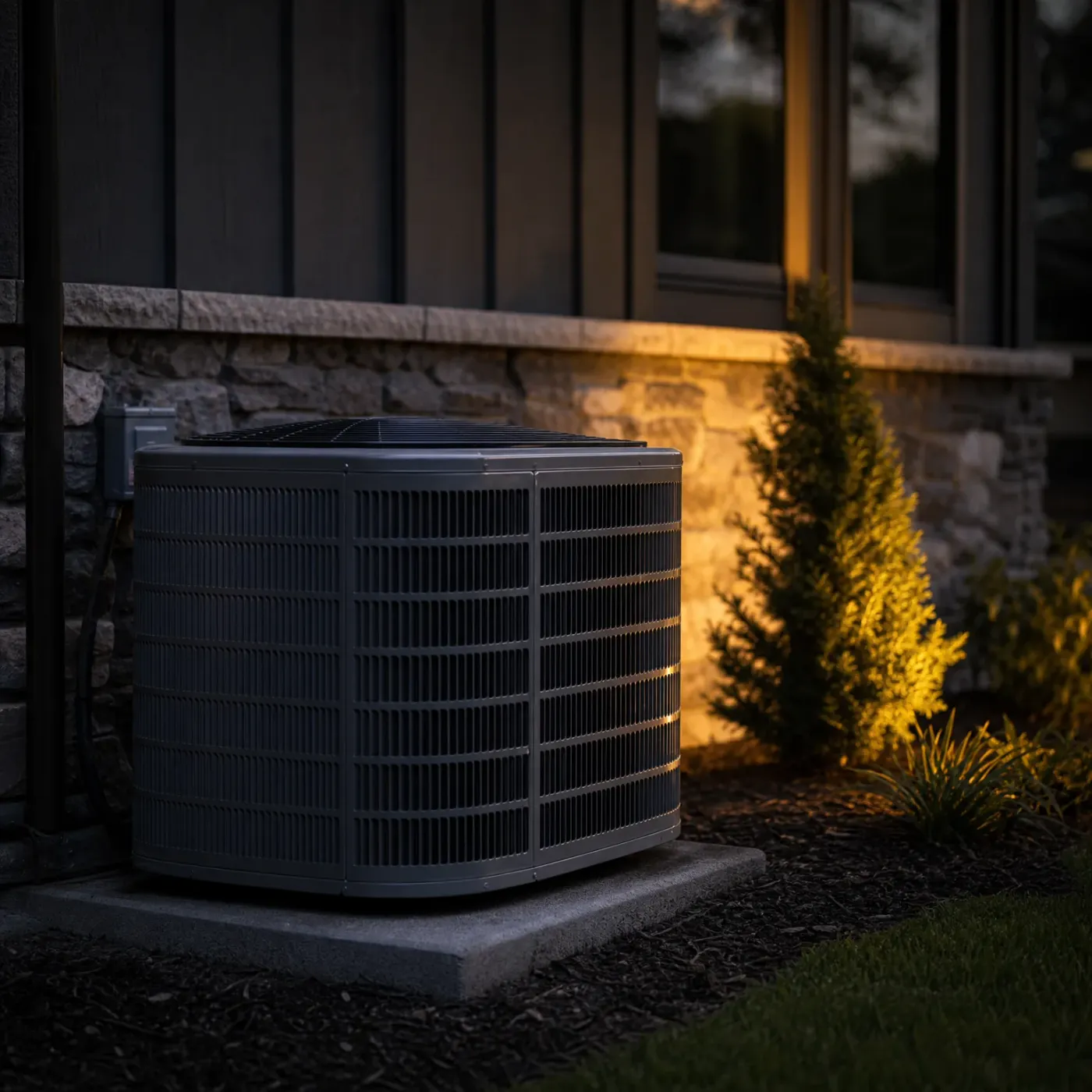
An outdoor air conditioning condenser unit on a concrete pad beside a house with stone veneer and vertical board siding, with a small shrub and mulch bed lit by a ground light at dusk.

An air conditioner pro near you

Why your AC smells like burning in North Dakota

A burning smell from your AC usually means something electrical is overheating, or dust burning off a part that just kicked on after sitting idle. It could also be a motor strained from running hard on a warm North Dakota afternoon. Below is what tends to cause it and when it's worth getting a local contractor to look.

Get a local pro

A burning smell from your AC almost always points to something electrical. A motor winding overheating, a wire insulation breaking down, or a capacitor failing inside the outdoor unit or the blower cabinet. Sometimes it's simpler: dust that settled on the blower motor while the system sat idle burns off in the first few minutes it runs, and that smell fades on its own. A sharp, acrid smell that doesn't fade is different. That usually means a part is overheating under load, which happens more on the warmer afternoons here when the compressor and fan run longer to keep up. If the smell comes back each time the system cycles on, or if you see the breaker trip, shut the system off at the thermostat. Running it longer with a part already overheating can mean a bigger repair, or in rare cases a bigger risk. A technician can trace the smell to the exact part in a short visit.

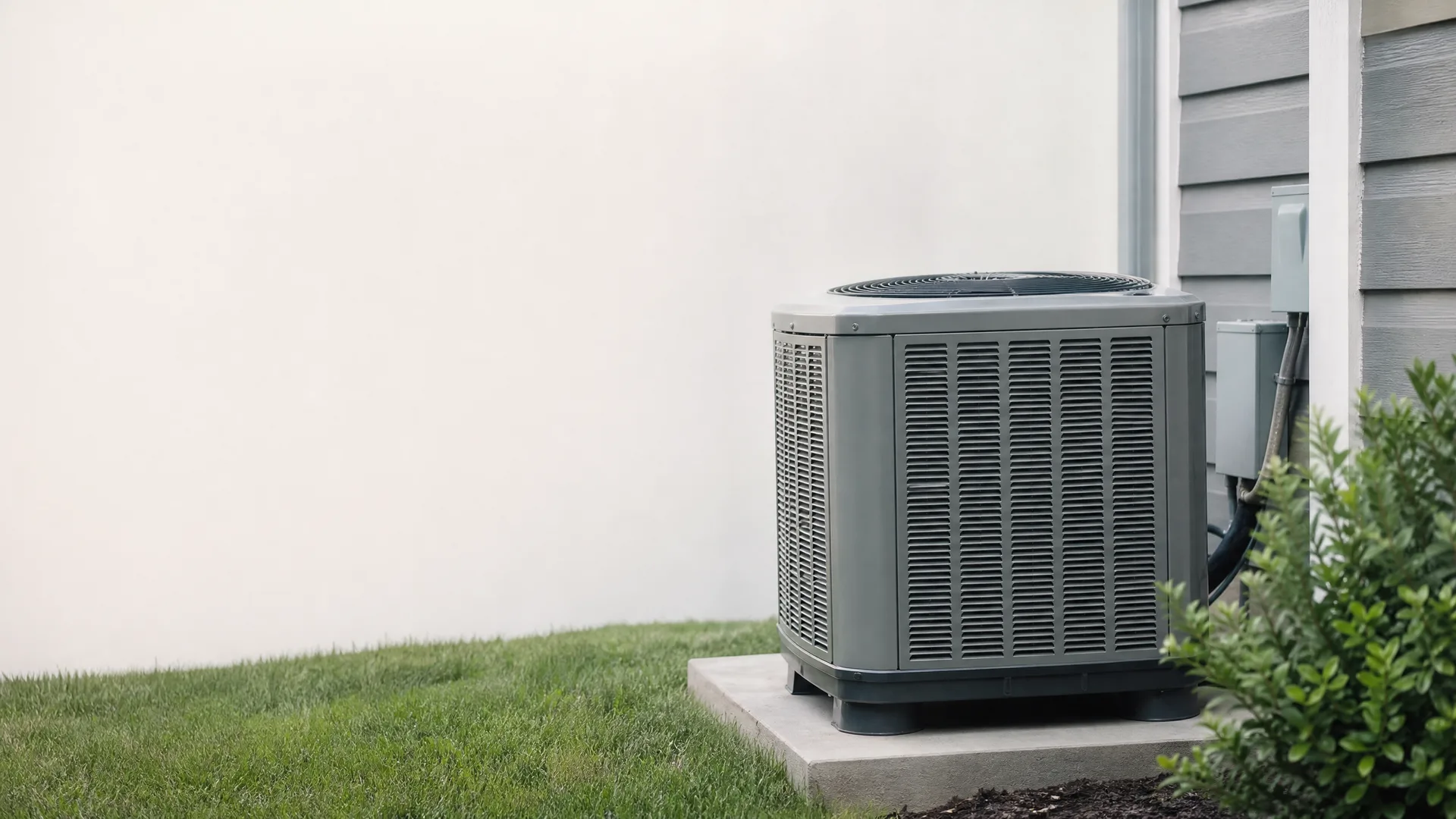
A gray outdoor air conditioner condenser unit on a concrete pad beside a house corner with lap siding and a stucco wall, surrounded by mown green grass.

The blower motor runs hardest in July

Your blower moves air every time the system calls for cooling, and on a hot July afternoon it can run for hours without stopping. A motor built to cycle on and off wears differently than one pushed to run long stretches. The windings heat up, the insulation on the wire gets brittle, and eventually a short develops. That's often where a burning smell starts, not from dirt but from the motor itself working harder than it was built to.

An outdoor air conditioning condenser unit on a concrete pad beside a house with light stucco and lap siding, with mown grass to the left and a green shrub to the right.

Capacitors fail without warning

The capacitor gives the compressor and fan motor the jolt they need to start. It sits in the outdoor unit exposed to whatever the weather brings, and over time the internal foil breaks down from heat cycling through warm afternoons and cool nights. A failing capacitor can arc or overheat right before it quits, and that's often the sharp, electrical smell you notice coming from the outdoor unit rather than the vents inside.

Does the Smell Go Away or Come Back

Smell fades fast

  • A burnt-dust smell that shows up when the AC first kicks on and clears within ten or fifteen minutes is usually just dust burning off the heat strip or coil after the system sat idle.
  • If the smell doesn't come back once the unit has been running a while, nothing is actively failing right now.
  • The system cools the house the way it should, and the air coming out of the vents doesn't carry the smell with it.
  • You can run the AC the rest of the day without the smell returning, even during the hottest stretch of the afternoon.
  • Shutting it off and back on later doesn't bring the smell back a second time.

Smell keeps coming back

  • A burning smell that returns every time the AC cycles on, or that gets stronger the longer it runs, points to something electrical that's actively overheating.
  • If the smell is sharper, like hot plastic or scorched wire insulation, rather than dusty, that's a wire or a capacitor, not settled dust.
  • A motor that's been running for hours straight on a warm North Dakota afternoon can overheat enough to produce that smell on its own.
  • The smell showing up along with the system tripping off, a breaker tripping, or the air not cooling like it should means it's not just dust.
  • Running the AC anyway while the smell keeps coming back risks turning an electrical fault into a bigger repair.
A gray outdoor air conditioning condenser unit on a concrete pad beside a house with horizontal lap siding, with a wall-mounted electrical disconnect box and refrigerant lines, shrubs, mulch and lawn around it.

Running clean

A condenser that looks like this has clear fins and a clean cabinet, and the air around it moves freely. No scorched smell, no haze near the disconnect box. It cycles on, runs, and shuts off without drama, which is what a healthy unit does all summer.


An outdoor air conditioner condenser unit on a concrete pad beside a house wall with stucco lower section, horizontal siding above, and a white downspout to the right.

Running into trouble

Dirt packed into the fins like this traps heat the unit needs to shed. The motor inside works harder to push air through it, and a strained motor is one of the things that starts to smell like burning. The grime on the housing is a sign it's overdue for a look.

An outdoor air conditioning condenser unit on a concrete pad beside a house with light vinyl siding, with electrical conduit running to a wall-mounted disconnect box and a shrub in mulch to the right.
Before you get your air conditioner repair
A gray outdoor air conditioning condenser unit on a composite pad beside a house with horizontal lap siding, with a wall-mounted disconnect box, refrigerant lines, and a wooden fence and shrubs to the left.
After you get your air conditioner repair
A gray outdoor air conditioning condenser unit on a concrete pad beside a house with horizontal vinyl siding, with mulch, a shrub, and lawn nearby.

A local pro for your air conditioner repair

Your request goes to one pro, not a list of companies.

Tell a local repair pro what your air conditioner is doing.

Get one local pro

You only hire the pro if you want to.

A woman with dark hair in a bun wearing a cream knit sweater sits on a gray sofa in a bright living room, looking off to the side.
A woman wrapped in a knit blanket sits on a gray sofa in a living room, looking toward a bright window with houseplants and an armchair in the background.
A woman in a gray cowl-neck sweater sits on a light sofa with cushions, smiling and looking to the side, with a kitchen and window visible behind her.
A woman with dark hair in a bun, wearing a light linen shirt, sits on a sofa and looks to the side, with a window, houseplants and a kitchen with pendant lights blurred behind her.

If the house smells like something's burning and the air coming out still feels cool, it's easy to let it ride another day. A strained motor doesn't fix itself by being ignored.

Keep running it and you risk the motor seizing outright, and then you've got no cooling at all on a warm North Dakota afternoon, not just a smell to figure out.

An older woman with gray hair in a bun and glasses, wearing a beige knit sweater, smiles while looking to the side in a warmly lit kitchen, with a loaf of bread on the counter in the foreground and a snowy scene outside the window.
A woman and a sleeping child wrapped together in a cream knitted blanket on a couch, with a potted plant, framed photo and lit lamp in the background.
A gray outdoor air conditioning condenser unit sits on a concrete pad beside a house with horizontal siding, connected by insulated lines to a wall-mounted disconnect box, with a shrub and gravel bed to the right.
A clean condenser like this draws air through open fins, so the motor and wiring inside stay at a normal temperature even on a warm North Dakota afternoon.
An outdoor air conditioning condenser unit sits on a concrete pad beside a house with horizontal vinyl siding, with a gray electrical disconnect box and insulated refrigerant line on the wall above, surrounded by bare mulched ground.
Grime packed into the fins blocks airflow, and the motor and wiring behind it run hotter than they're built for, which is where that burning smell starts.

Power costs 11.82 cents per kilowatt-hour statewide

At 11.82 cents per kilowatt-hour, running your AC hard doesn't hit your bill the way it would elsewhere. That's partly why a strained motor or a failing capacitor can keep working overtime without anyone noticing the cost creeping up, until the smell shows up first.

EIA-861 2025 statewide residential average

A gray outdoor air conditioning condenser unit on a concrete pad beside a house with horizontal vinyl siding, a brick foundation, downspout, electrical disconnect box, mulch bed and a green shrub.

Working normally

A condenser like this sits clear of mulch and shrubs, with open space for air to move through the fins. It cycles on for a while during a warm North Dakota afternoon, runs steady, and shuts off. No odor near the disconnect box, no haze in the air around it.

An outdoor air conditioning condenser unit with a dirty mesh coil guard sits on a concrete pad beside a house with horizontal lap siding, a wall vent, and conduit running to an electrical disconnect box.

Fins caked with grime

Dirt packed into the mesh grille and fins like this blocks the airflow the unit needs to cool itself. The motor and wiring behind that buildup run hotter than they should, and heat is what turns a normal mechanical smell into a burning one.

A woman in a cream sweater and jeans stands in the open doorway of a white stucco house, holding the dark door, while a man in a dark quilted jacket seen from behind walks toward the entry past potted plants.

A burning smell is the system telling you something failed

A burning smell from your AC is electrical almost every time: a motor winding, a capacitor, a wire losing its insulation. Dust burning off after the unit sat idle clears in a few minutes. A smell that lingers or comes back once the unit has been running means a part is overheating, and it won't cool itself off by running less.

A contractor who works on these systems every summer in North Dakota has seen which part gives out first in units run hard on warm afternoons, and can check the motor, the capacitor and the wiring behind that smell instead of guessing. Once you request service, you're matched with one licensed local contractor for your situation, not a list of companies competing for the call, and that contractor reaches out to you directly.

A living room corner with a beige sofa and cushion, a round wooden coffee table holding a pale ceramic vase of eucalyptus stems and a wooden bowl, and a curtained window with a potted plant above a latticed radiator cover in the background.
A single-story stucco house at dusk with a lit paver walkway lined by low path lights, desert plants and boulders in front, and distant mountains under an orange and blue sky.

Air Conditioner Repair

Get the right pro for your air conditioner

Step 1 of 3: Equipment
  • A grey upholstered armchair with a textured beige cushion and a chunky knit throw sits beside a window with linen curtains, next to a round wooden side table holding a speckled ceramic mug on a book, with a leafy plant behind.
    • Describe your air conditioner job, and a local pro who handles it gets in touch.
    • Say what's going on with your air conditioner, and a pro who works on them reaches out.
  • A chunky beige knit throw draped over a gray upholstered armchair beside a window with linen curtains, a ceramic vase of green leafy branches on a wooden table, and a ceramic mug in the foreground.
    • Get the air conditioner repair search off your mind today.
    • Once you send the form, finding a pro is off your list.
  • A ceramic table lamp with a cream drum shade and a small spiky succulent in a textured gray pot sit on a dark wooden side table with a drawer and a woven basket on the lower shelf, beside a beige upholstered sofa and a framed landscape picture on a pale wall.
    • Fill out one short form instead of calling around.
    • Explain the job once and skip repeating it on every call.
  • A mudroom with a denim jacket and tan jacket on wall hooks above a rustic wooden bench holding a striped cushion, a woven basket underneath, slate tile floor with a jute rug, and a black-framed window at right.
    • Only one pro gets your request, so you hear from one company.
    • Your request stays with one local pro.