Running quiet
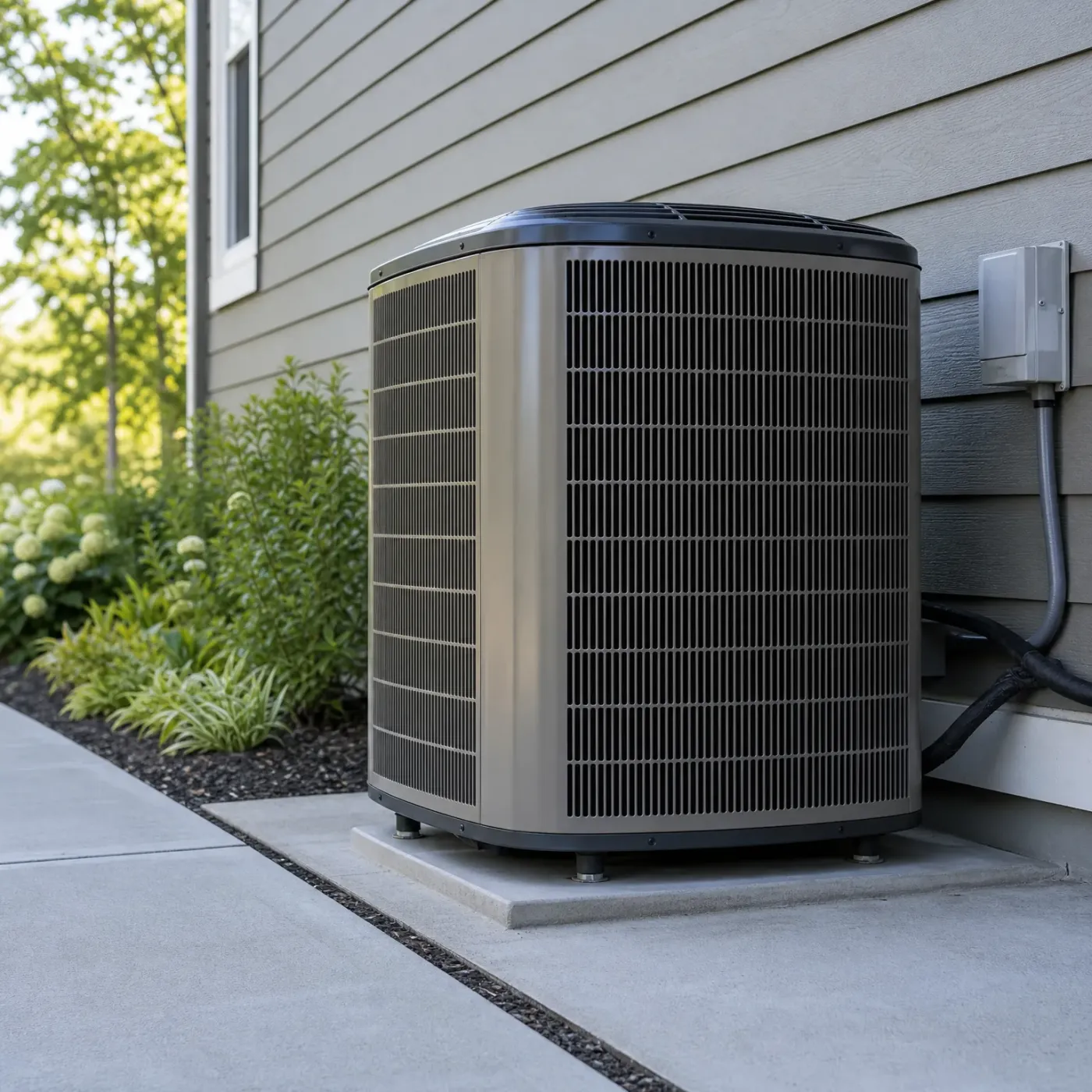
A healthy condenser outside your house hums low and steady, nothing sharp or buzzing. The fan spins freely and the unit cycles on without hesitation. Refrigerant lines stay secure along the wall, and the disconnect box sits untouched.

A buzzing sound usually means an electrical part in the outdoor unit is failing, not just loose. The most common cause is a weak run capacitor, the part that keeps the compressor and fan motor running steady. When it wears out, the motor struggles to start and hums or buzzes instead of turning over cleanly. Loose fan blades, a failing contactor, or wiring that's come loose from vibration can cause the same sound. None of these fix themselves, and running the unit while a capacitor is failing can burn out the compressor, which costs far more to replace. North Dakota summers don't put the long, constant strain on an AC that humid climates do, so if yours is buzzing already, something inside it needs attention rather than just age catching up with it. Either way, it's worth having someone look at it before the next hot stretch.




The buzz tells you where to look, but not always what's wrong on its own. Inside the outdoor unit, the contactor is the switch that completes the circuit to the compressor every time the thermostat calls for cooling. If its contacts are pitted from years of arcing, it chatters instead of closing clean, and that chatter is a buzz. Wires that have worked loose at the terminal screws do the same thing, arcing a little each time current passes through. A weak capacitor shows up differently. It can't give the fan motor the jolt it needs to start, so the motor hums and hesitates before it catches, and a compressor fighting the same problem pulls more current than it should. Not every buzz is electrical. A fan blade clipping the housing, or a refrigerant line shaking against the cabinet, can sound close enough to fool you. A contractor opens the unit, tests the capacitor's output, checks the contactor and the wiring under power, and finds which of these is actually behind it.



A healthy condenser outside your house hums low and steady, nothing sharp or buzzing. The fan spins freely and the unit cycles on without hesitation. Refrigerant lines stay secure along the wall, and the disconnect box sits untouched.

An older unit like this one has had years of North Dakota heat and winters working the cabinet and the parts inside it. A buzz here often starts at the disconnect box or where the lines meet the foundation, wiring and connections that have simply worn with age.
That buzz that lasts a second or two right when the unit kicks on, then either smooths out or keeps going, is a different problem than a steady buzz the whole time it runs. You want to know if that startup noise means something is about to fail, or if it is just how the unit sounds getting going.
A capacitor stores the charge that gets the compressor and fan motor moving. A healthy one delivers that charge in an instant, so the unit starts clean. A weak one still has some charge left, just not enough, so the motor hums and strains against its own resistance before it catches, or sometimes never catches at all. That is the buzz you are hearing. It tends to get worse on hot afternoons, when the compressor is working hardest and needs the most from the capacitor to get going. If the buzz lasts longer each time, or the unit starts skipping a cycle before it kicks on, that capacitor is closer to failing outright.

The contactor is a switch that sends power to the compressor and fan motor every time your thermostat calls for cooling. It opens and closes thousands of times over a summer. Each time, the contact points touch under load, and over years that wears the metal down. A pitted contactor can't seat flat, so power arcs across the gap instead of flowing clean, and that arc is what you hear.

North Dakota summers don't put the humidity load on a unit that other places do, but the compressor still works hardest on the warmest afternoons, when it runs longest and cycles most. A capacitor or contactor that's already weak shows it under that load first. If the buzz only shows up on the hotter days and goes quiet in cooler stretches, that's the part telling you it's close to failing.
You probably noticed it on one of the warmer evenings, with the unit running steady outside while you're trying to relax. The buzz might fade when the AC shuts off, then come right back the next time it kicks on. Some people notice the fan seems to spin slower than it used to, or the unit takes a beat longer to start cooling. If this keeps going, the compressor is working harder than it should, and a part that's already struggling can fail outright, often on the hottest day you need it most. That's usually when it turns from a noise you tolerate into a house with no cooling at all.




Fill out one short form instead of calling around.
Send it once and finding someone is no longer on you.
You're not committing to anything by asking.
At 11.82 cents a kilowatt-hour, running your AC here doesn't cost much, so a buzzing unit isn't about to spike your bill the way it would in some other state. That's not a reason to leave it alone. A failing capacitor or loose contactor only gets worse, and the cost that matters is the repair, not the power to run it.
EIA-861 2025 statewide residential average

It's past seven and the light is going flat and gold over the yard. You're out back checking the tomatoes when you hear it, that buzz coming from the condenser against the house, except tonight the fan isn't spinning. The unit is trying. You can hear it trying. You crouch down near the grille and the blades sit still while the buzzing keeps going, steady and electrical, nothing like the low hum you're used to. Inside, the house is still holding the day's heat. You straighten up, wipe your hands on your jeans, and head in to find your phone, leaving the buzz going behind you in the dark yard.

Summer air here isn't heavy. The dew point averages 53°F across June, July and August, a figure from NOAA climate data, and that's dry enough that your AC isn't fighting to wring moisture out of the air the way units do in muggier states. That matters for a buzzing unit because the strain you're hearing isn't the compressor laboring against humidity. It's a part failing on its own terms, a capacitor wearing out or a wire arcing at the contactor. The buzz will still get worse on hot evenings when the compressor works harder to cool, but dry air isn't adding to the load.
NASA POWER T2MDEW county cells weighted by homes

A buzzing condenser almost always traces back to one part: a capacitor that's wearing out or a contactor with a loose or pitted connection. Neither gets better with time, and neither needs you to figure out which one it is before you get help. That's the part a licensed contractor sorts out once they're standing in front of the unit.
What you don't need is the evenings it usually takes to get to that point. Looking up contractors, calling a few, explaining the buzz and when it happens, then waiting on quotes to come back so you can compare them. Send the form once and that search is off your plate. You'll know who's coming, and you can get back to the yard instead of the phone.


Explain the job once and skip repeating it on every call.
It costs nothing to send, and you don't have to hire anyone.